Summary

Microplastics and Per- and polyfluoroalkyl substances (PFAS) are widespread environmental contaminants resulting from modern manufacturing and everyday consumer products. Microplastics are tiny plastic fragments that form when larger plastics break down, and they are now found throughout ecosystems, food, and even human tissue. Efforts to limit microplastics include reducing single-use plastics and introducing laws to ban certain products. PFAS are a group of chemicals used in making consumer products. Like microplastics, PFAS last long in the environment and living organisms, raising health concerns. Federal agencies are working to limit exposure, but individuals can also reduce risk by avoiding products containing these substances.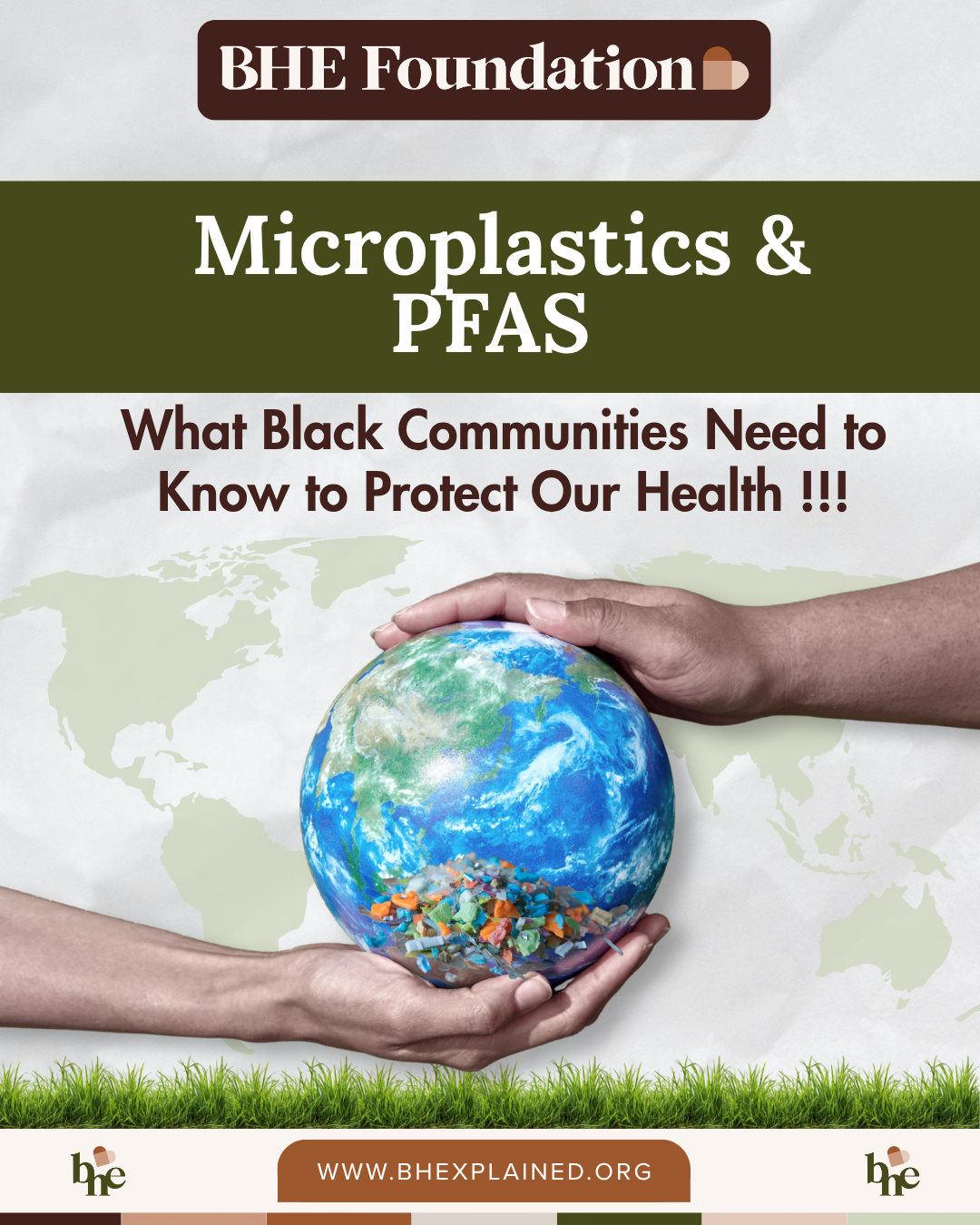
Happy Earth Day 🌍
Happy Earth Day! Today, we’ll dive into the critical issues of microplastics and Per- and polyfluoroalkyl substances (PFAS) — two pervasive environmental contaminants that pose significant risks to both our planet and our health. Understanding these threats is crucial, especially for Black men and women aged 24-45, as we navigate a world where systemic inequalities often place our communities in harm’s way. By reading this post, you'll gain insights into what microplastics and PFAS are, how they affect our health and environment, and practical steps you can take to limit your exposure while advocating for systemic changes.Microplastics
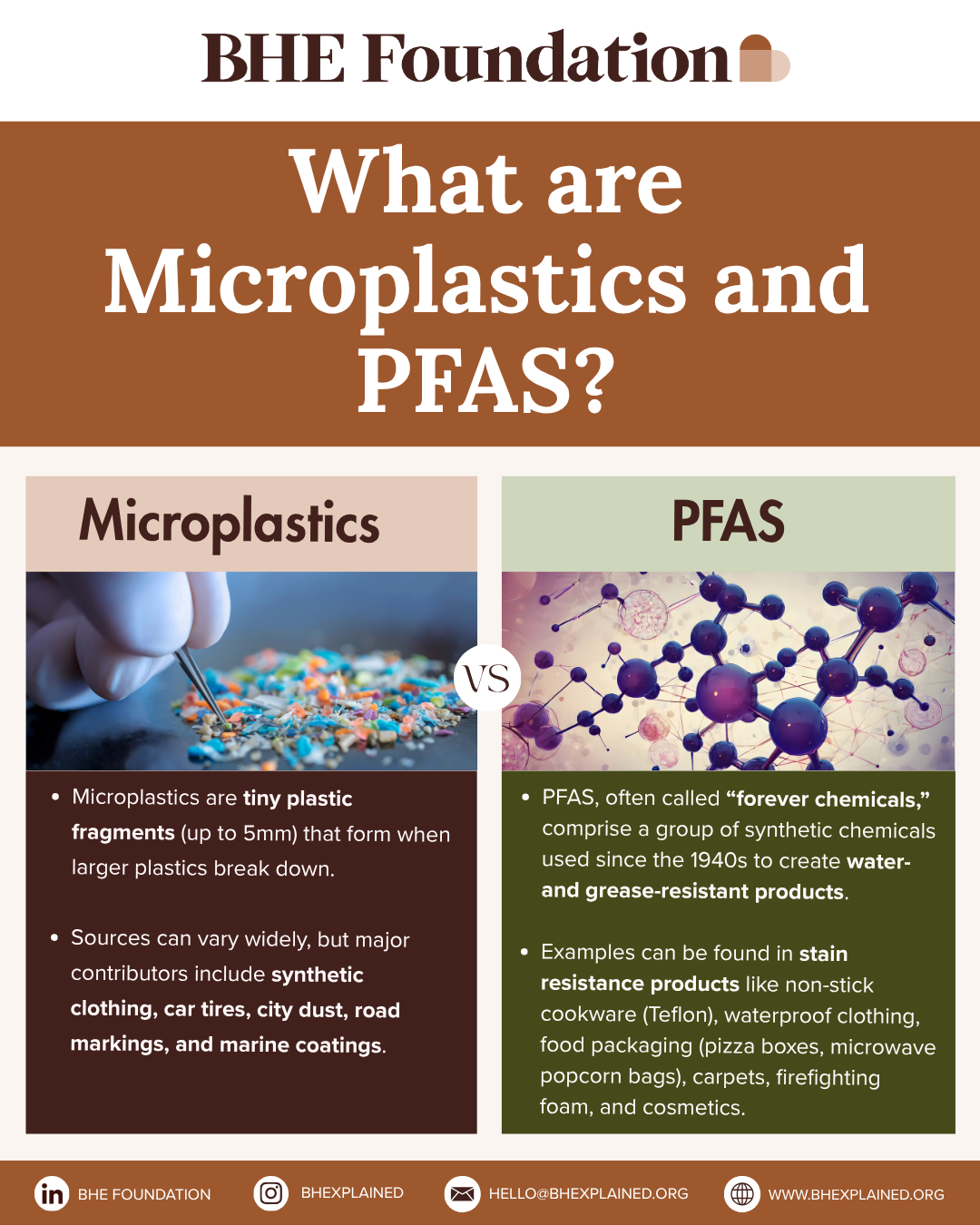
Microplastics are tiny plastic particles less than 5 millimeters long that result from the breakdown of larger plastic products. The first fully synthetic plastic was invented in 1907 by Leo Baekeland. In the 1950s, plastic production rapidly increased to new forms of the material, including polyester, nylon, Styrofoam and Plexiglas. By the late 1960s, experts began warning about the dangers of plastic pollution, including islands of debris clogging the oceans. They are now omnipresent in our environment, infiltrating water sources, food supplies, and even human tissues. Every year, an estimated 10 to 40 million metric tons of these particles are released into nature.Early research in animals and human cells suggests exposure may affect:Breathing and lung healthDigestionReproductive healthPotential risks for chronic diseases (cancer, heart attacks)
However, human research is still limited, meaning we don’t yet fully understand the long-term health impact.
What Are PFAS (“Forever Chemicals”)?
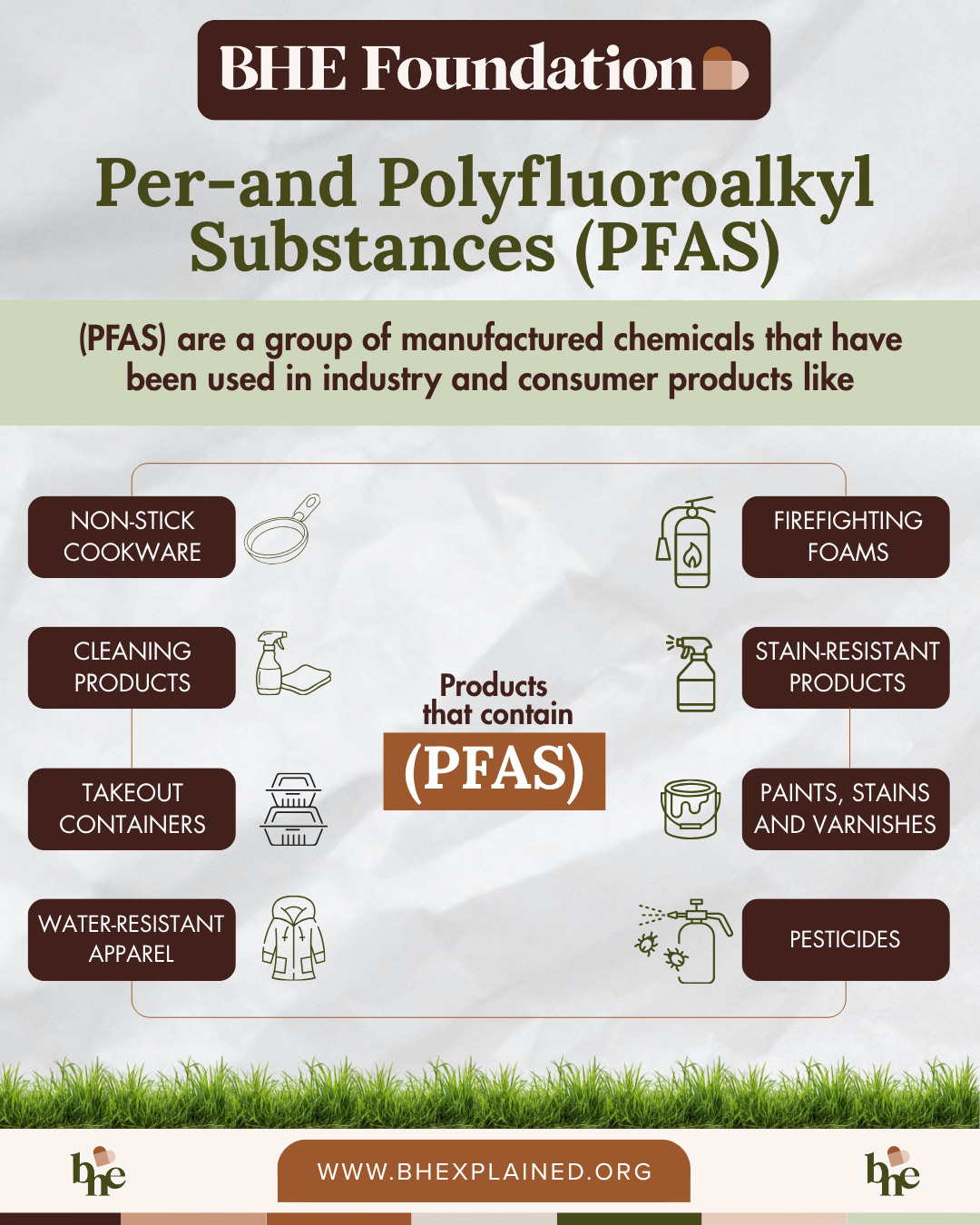
PFAS, often called “forever chemicals,” comprise a group of synthetic chemicals used since the 1940s to create water- and grease-resistant products. Found in everything from stain-resistant carpeting to nonstick cookware, these substances accumulate in our bodies and the environment because they break down very slowly.
Exposure can happen through drinking water, food, air, or contact with everyday products.
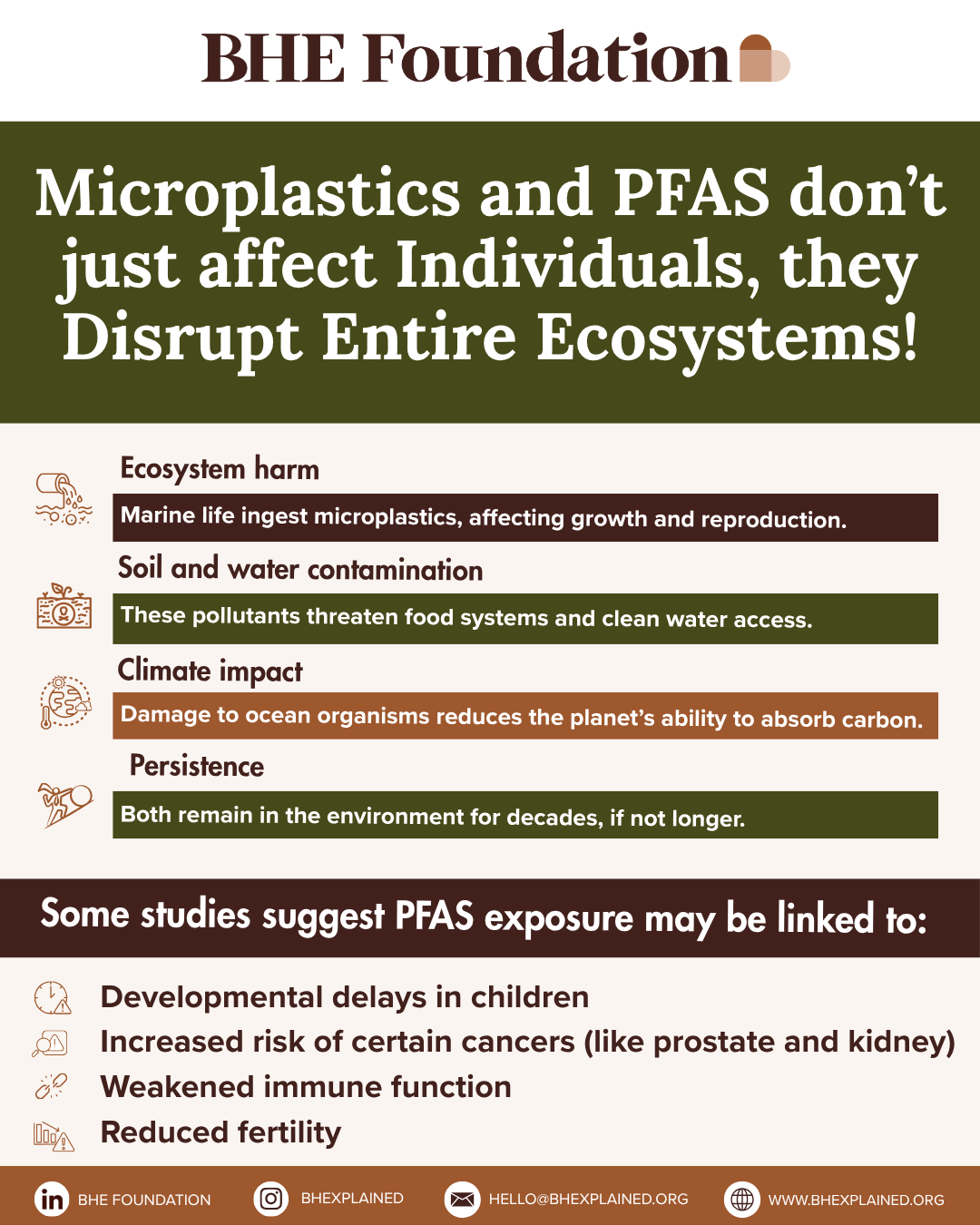
Some studies suggest PFAS exposure may be linked to:
Developmental delays in children
Increased risk of certain cancers (like prostate and kidney)
Weakened immune function
Reduced fertility
Like microplastics, research is ongoing—but the evidence we do have raises concern.
Effects on the Earth and Our Health
Microplastics and PFAS don’t just affect individuals—they disrupt entire ecosystems:
Ecosystem harm: Marine life ingests microplastics, affecting growth and reproduction
Soil and water contamination: These pollutants threaten food systems and clean water access
Climate impact: Damage to ocean organisms reduces the planet’s ability to absorb carbon
Persistence: Both remain in the environment for decades, if not longer
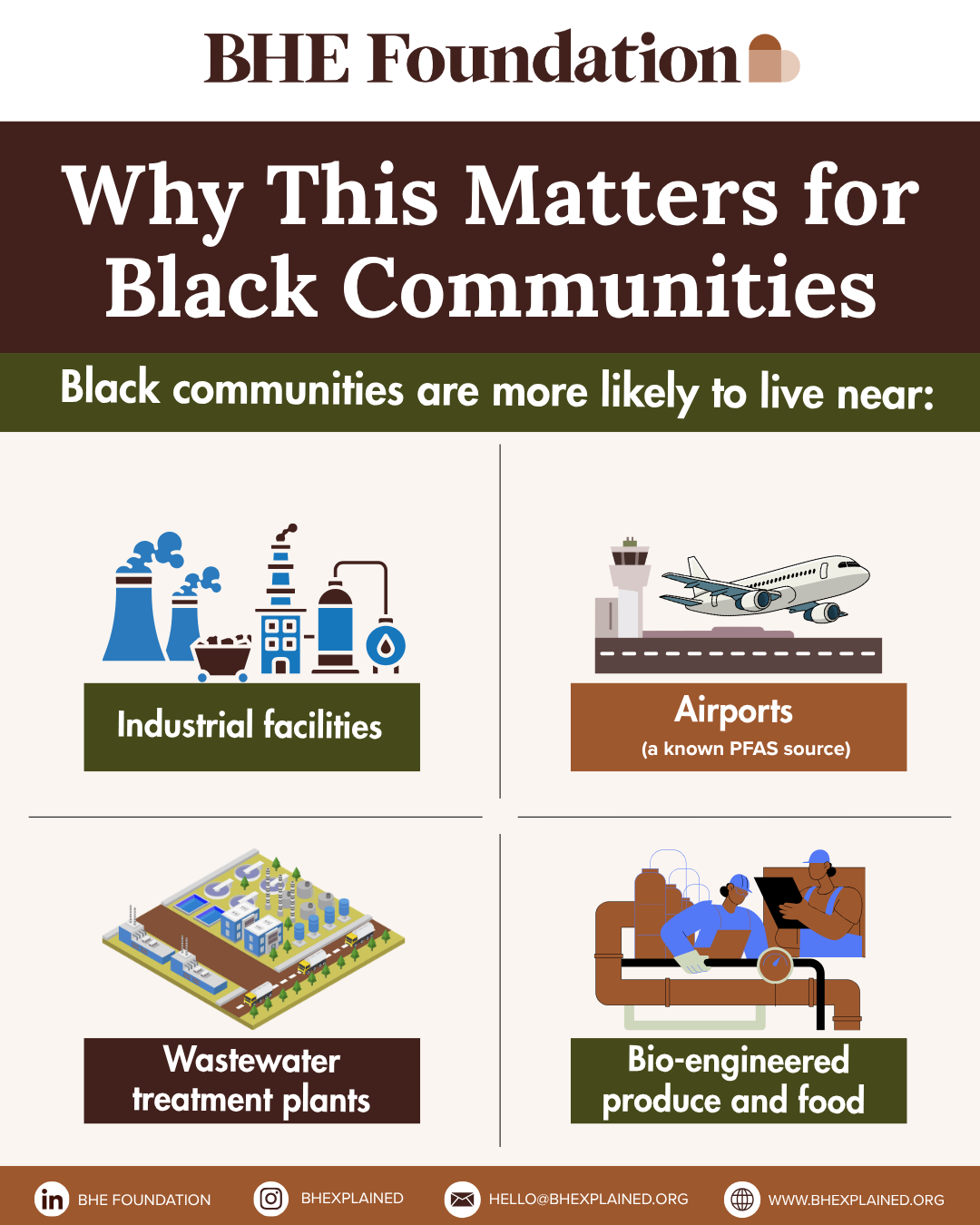
Why This Matters for Black Communities
You may be asking – How is this related to me? Well not only is this an environmental issue, it’s also an health equity issue. Due to historical systemic polices such as redlining, our communities are disproportionately located near sources of PFAS and plastic pollution. Black Americans, specifically, are 75% more likely to live near facilities that produce hazardous waste.
Black communities are more likely to live near:
Industrial facilities
Airports (a known PFAS source)
Wastewater treatment plants
These environmental exposures increase risk over time.
It’s also important to note that the costs of products have an impact. It is cheaper to buy polyester clothing and plastic food containers than to buy durable clothing or glass containers, making it harder to avoid exposure without systemic change.
“Redlining - a discriminatory, illegal practice where lenders and insurers deny or limit financial services—such as mortgages or insurance—to residents of specific neighborhoods, often based on race, ethnicity, or income.”
What We Can Do (Realistic, Everyday Steps)
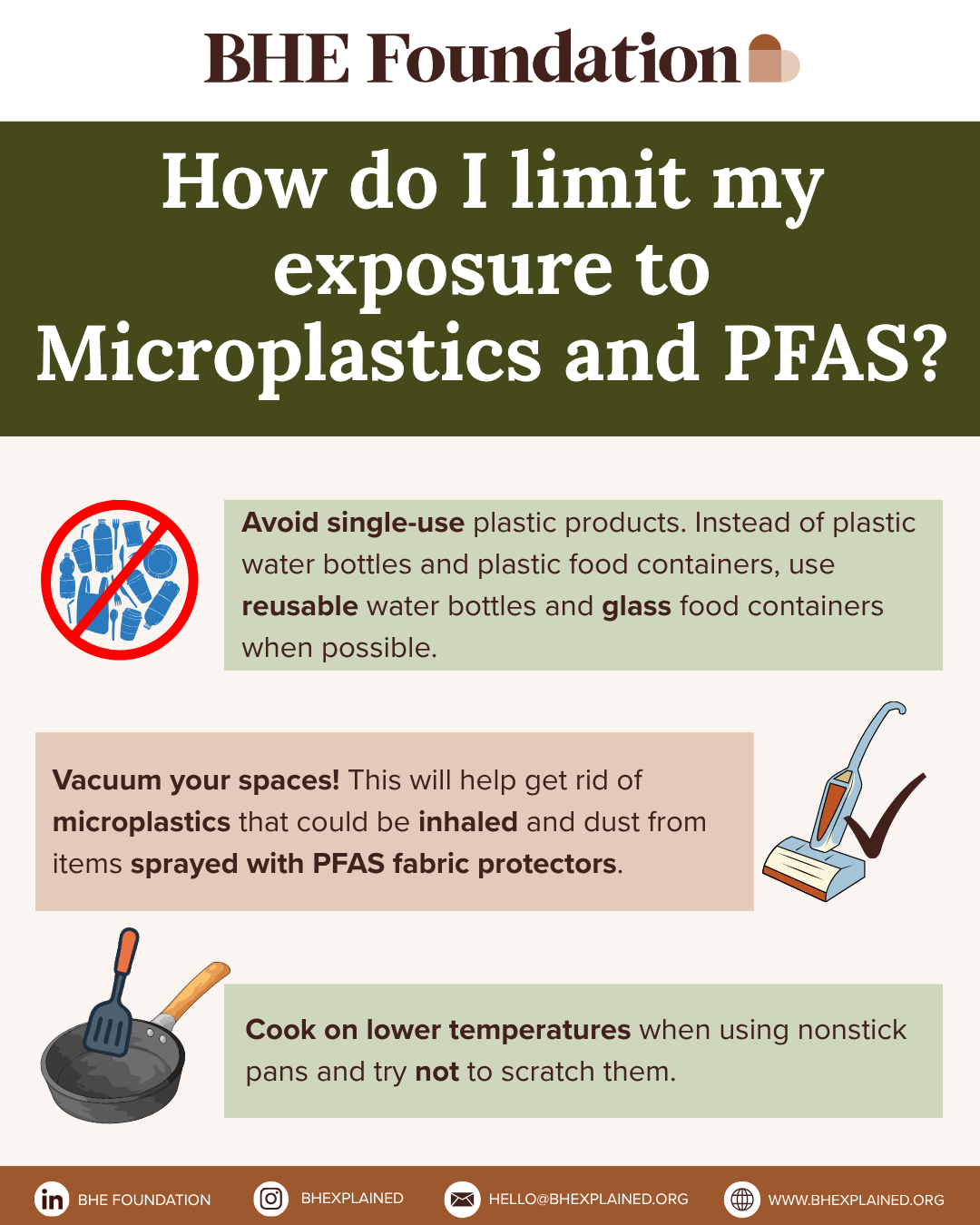
While we can’t eliminate exposure completely, small changes can reduce risk:
To limit microplastics:
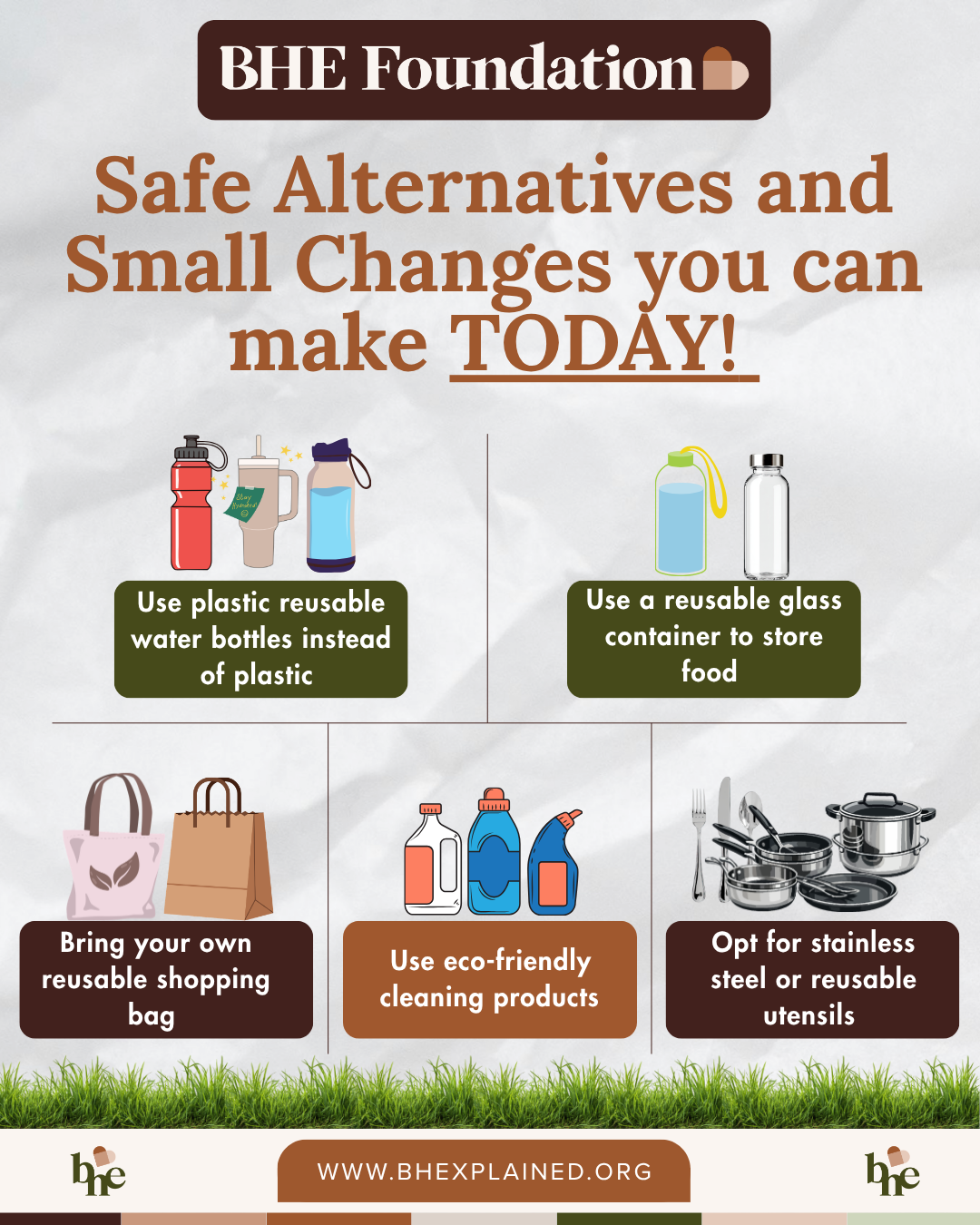
Use reusable water bottles instead of single-use plastic
Choose wood or glass over plastic when possible
Cut back on highly processed foods
Vacuum regularly to reduce dust particles
Wash clothes less often and air-dry when possible
To reduce PFAS exposure:
Avoid nonstick cookware at high heat or when scratched
Don’t reheat food in plastic containers
Look for labels like “PFAS-free” or “fluorine-free”
Be mindful of waterproof or stain-resistant products
Vacuum frequently to reduce indoor chemical dust
These steps help—but they shouldn’t be the only solution.
The Reality: Research Is Still Limited
One of the biggest challenges is that research is still catching up.
We know these substances are everywhere.
We know they persist in the body and environment.
We know there are links to health concerns.
But we don’t yet have all the answers—which is exactly why awareness and advocacy are critical.
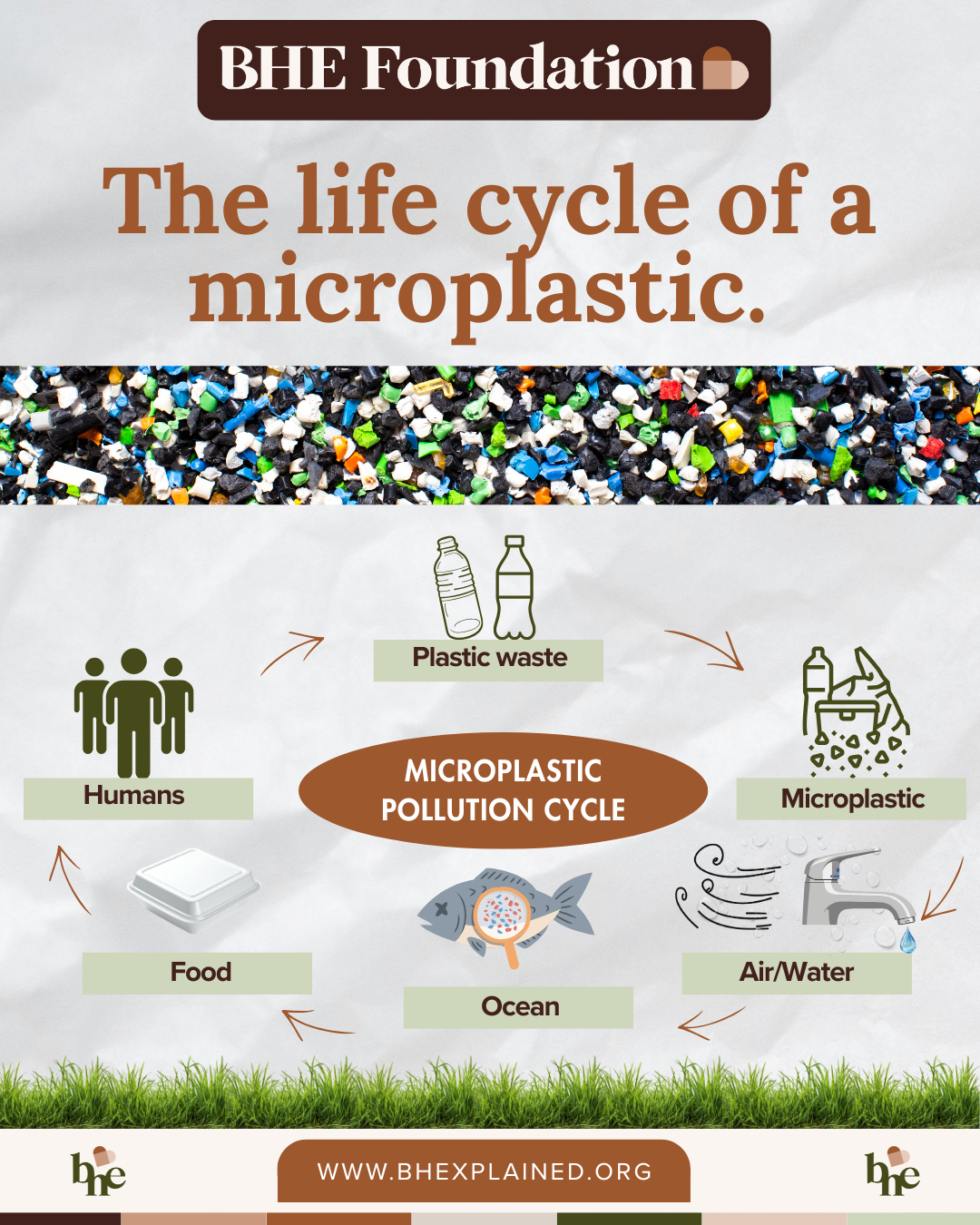
A microplastic’s journey begins as an everyday item, like a water bottle or plastic fork. After use and disposal, it breaks down into tiny fragments that spread through soil, water, and air. These particles enter oceans through wind and waste, where marine life ingests them. Eventually, they make their way back to us through the seafood we eat, completing the cycle.
How You Can Help Drive Change
Individual actions matter; But, meaningful progress depends on broader, system-level solutions.
There have been important steps in the right direction, including federal efforts to regulate certain PFAS chemicals in drinking water, bans on microbeads in personal care products, and new research initiatives focused on understanding microplastics in the human body.
Just ahead of Earth Day, on March 26, 2026, U.S. Health and Human Services Secretary Robert F. Kennedy Jr. and Environmental Protection Agency Administrator Lee Zeldin announced a series of new initiatives aimed at addressing microplastics in both the human body and drinking water. Among them is a $144 million program called STOMP (Systematic Targeting of Microplastics), designed to better understand and combat this growing issue. As Kennedy explained, the effort is centered on three key questions: what is in the body, what harm it may be causing, and how it can be removed.
These coordinated actions mark a significant acknowledgment of microplastics as an urgent public health concern. However, meaningful solutions may take years to fully develop and implement.
In the meantime, there are steps you can take right now;
Advocate for stronger environmental protections
Stay informed about your local water quality and related policies
Support leaders and initiatives that prioritize environmental justice
Conclusion
This Earth Day, and every day, protecting the planet also means protecting our health and our communities.
Microplastics and PFAS are part of a larger story about environmental exposure, access, and equity. While we can take small steps in our daily lives, lasting change will come from collective action and policy reform.
Start where you can. Stay informed. And remember, your voice matters in shaping healthier environments for all of us.