
Fellas, Stop Waiting Until Something Hurts: Why Your Annual Check-Up Matters
Let's be honest.
Some of y'all will change the oil in your car every 5,000 miles, rotate the tires, check the brakes, and argue with strangers online about the best motor oil—but haven't seen a doctor in three years.
Brother, make it make sense.
For many men, especially Black men, the doctor's office only becomes a destination when something hurts, something stops working, or somebody in the family starts asking questions. Unfortunately, waiting until something is wrong can mean missing opportunities to catch health issues early, when they're often easier to treat.
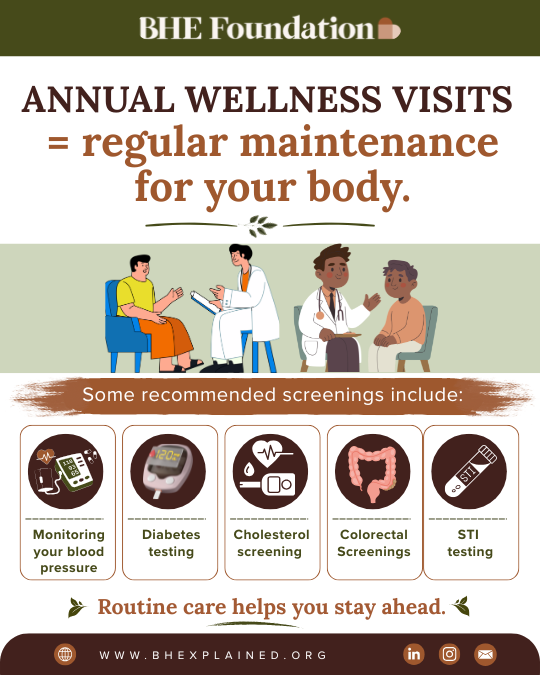
Just like your car needs routine maintenance, your body does too.
An annual wellness exam—also called a physical or yearly check-up—is one of the simplest ways to protect your health. During these visits, your doctor checks key health markers, reviews your medical history, and looks for warning signs before they become serious problems.
And for Black men, those routine appointments can literally save lives.
Why Black Men Shouldn't Skip the Doctor
Black men face higher rates of several serious health conditions, including heart disease, high blood pressure, diabetes, stroke, and certain cancers. Many of these conditions develop quietly with few or no symptoms.
Translation?
You can feel perfectly fine while something serious is brewing behind the scenes.
The good news is that annual check-ups help identify problems early. They also help you understand what healthy looks like for your body and what steps you can take to stay that way.
Research consistently shows that people who receive preventive care spend less time in emergency rooms and hospitals and often spend less money on healthcare overall.
In other words, a one-hour appointment today could save you weeks of stress later.
Let's talk about some of the most important screenings every Black man should know.
Blood Pressure: The Silent Opp….
High blood pressure—also called hypertension—has earned the nickname "the silent killer" for a reason.
There are usually no symptoms.
No flashing lights.
No warning notifications.
No pop-up message saying, "Hey bro, your arteries are struggling."
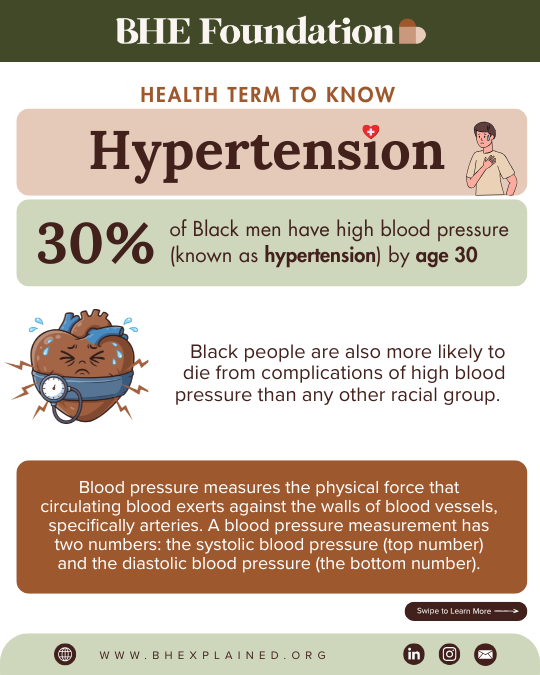
About 30% of Black men have high blood pressure by age 30, and Black Americans are more likely to die from complications related to hypertension than any other racial group.
Blood pressure measures the force of blood pushing against your artery walls. When that pressure stays too high for too long, it increases your risk of heart disease, stroke, kidney disease, and other serious health problems.
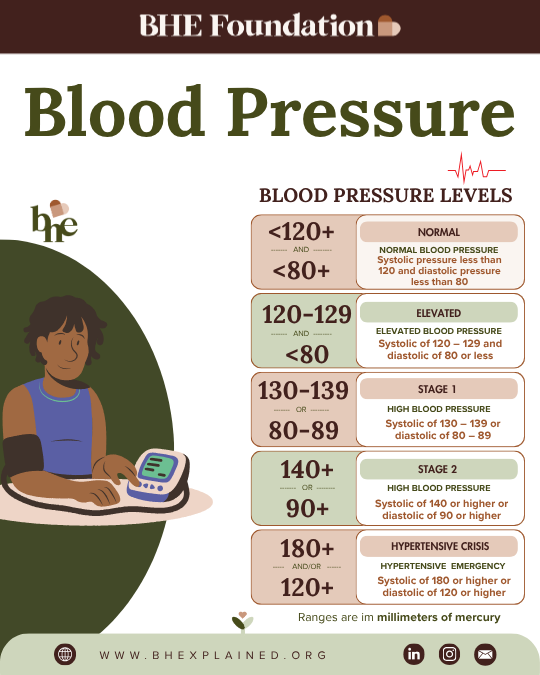
Understanding Your NumbersYour blood pressure reading has two numbers:
Systolic pressure (top number): Pressure when your heart beats.
Diastolic pressure (bottom number): Pressure when your heart rests between beats.
Blood Pressure Categories
Elevated
Systolic: 120–129
Diastolic: Less than 80
Normal
Less than 120/80
Stage 2 Hypertension
Systolic: 140 or higher
Diastolic: 90 or higher
Stage 1 Hypertension
Systolic: 130–139
Diastolic: 80–89
Hypertensive Crisis
Systolic: 180 or higher
Diastolic: 120 or higher
The only way to know your blood pressure is to have it checked regularly. Since hypertension rarely causes symptoms, guessing is not a strategy.
Glucose and Diabetes: Know Your Numbers
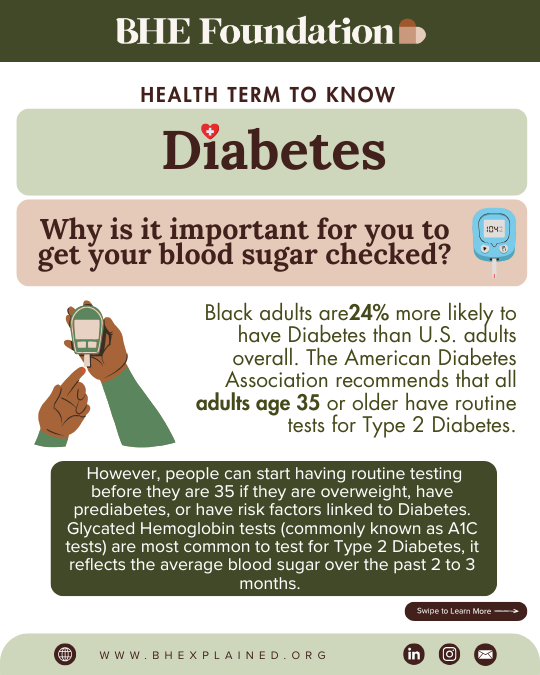
If you've ever heard someone say, "I got a little sugar," they were likely talking about diabetes. And it's a major issue in the Black community.
Approximately 13.4% of Black men in the United States live with diagnosed diabetes. Black men are also significantly more likely to develop complications such as kidney disease, vision loss, amputations, and heart disease.
The American Diabetes Association recommends routine Type 2 diabetes screening beginning at age 35. However, screening may start earlier if you:
Are overweight
Have prediabetes
Have a family history of diabetes
Have other diabetes risk factors
What Is an A1C Test?
The most common screening test is called an A1C test. Unlike a finger-stick blood sugar test that shows what's happening right now, an A1C measures your average blood sugar over the previous two to three months. Think of it as your blood sugar report card.
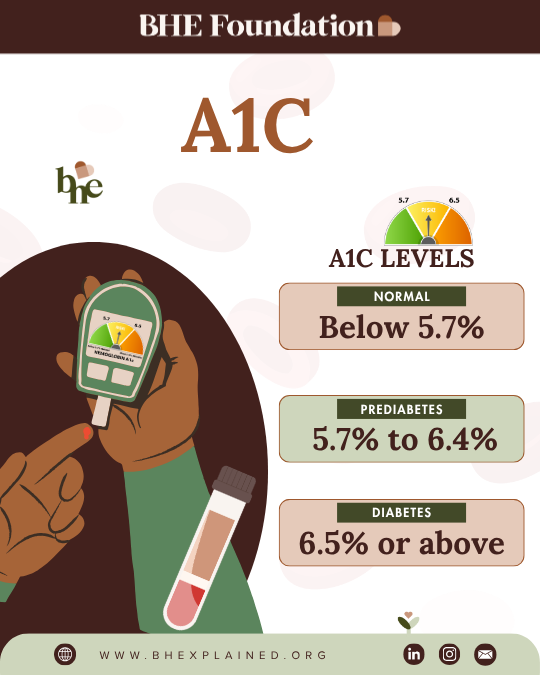
A1C Levels
Normal
Below 5.7%
Prediabetes
5.7% to 6.4%
Diabetes
6.5% or higher
Knowing your A1C can help you make lifestyle changes before diabetes develops or prevent complications if you already have it.
Cholesterol: Not All Cholesterol is Bad
Most people only think about cholesterol when they're reading nutrition labels or pretending they'll start eating salads next week.
But cholesterol is something your doctor pays close attention to.
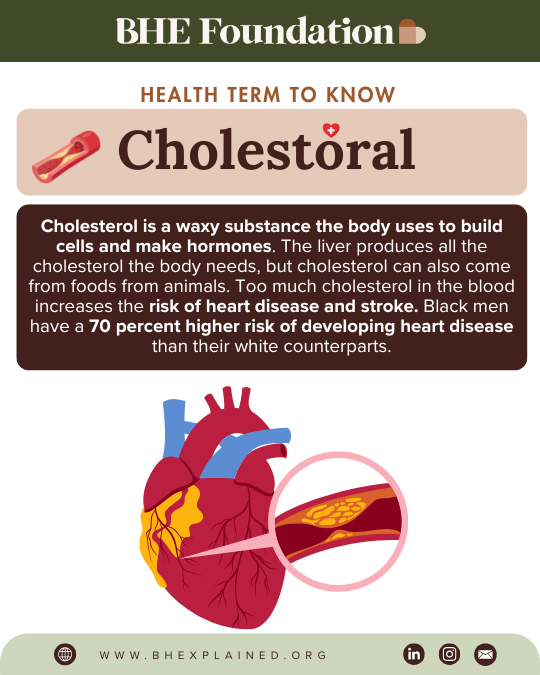
Cholesterol is a waxy substance your body uses to build cells and make hormones. While your body needs some cholesterol, too much can increase your risk of heart disease and stroke. Black men face a significantly higher risk of developing heart disease compared to White men, making cholesterol checks especially important.
How Is Cholesterol Measured?
Your doctor will usually order a lipid panel, a blood test that measures:
Total cholesterol
HDL ("good" cholesterol)
LDL ("bad" cholesterol)
Triglycerides
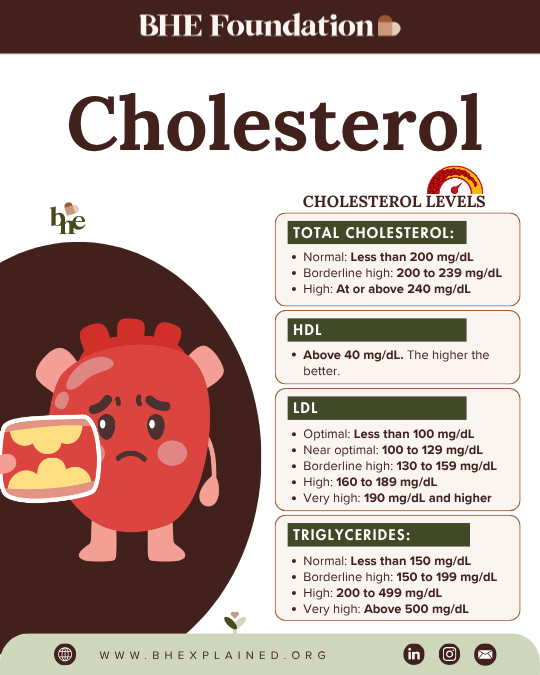
Cholesterol Levels
Triglycerides
Normal: Less than 150 mg/dL
Borderline High: 150–199 mg/dL
High: 200–499 mg/dL
Very High: Above 500 mg/dL
Total Cholesterol
Normal: Less than 200 mg/dL
Borderline High: 200–239 mg/dL
High: 240 mg/dL or higher
LDL (Bad Cholesterol)
Optimal: Less than 100 mg/dL
Near Optimal: 100–129 mg/dL
Borderline High: 130–159 mg/dL
High: 160–189 mg/dL
Very High: 190 mg/dL or higher
HDL (Good Cholesterol)
Above 40 mg/dL
Higher is better
Don't just glance at the lab results and say, "Looks good to me."
Ask questions and make sure you understand your numbers
Colorectal Cancer: Yes, We Need To Talk About It
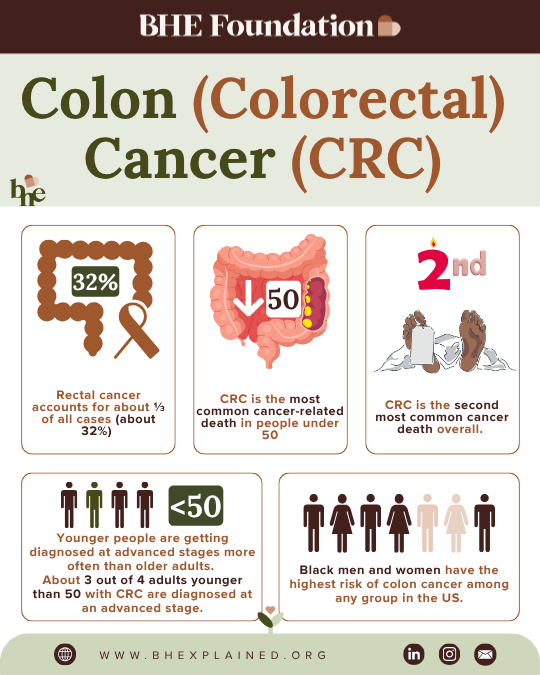
Let's address the elephant in the room. Nobody gets excited about colon cancer screenings. But ignoring the conversation doesn't make the risk disappear.
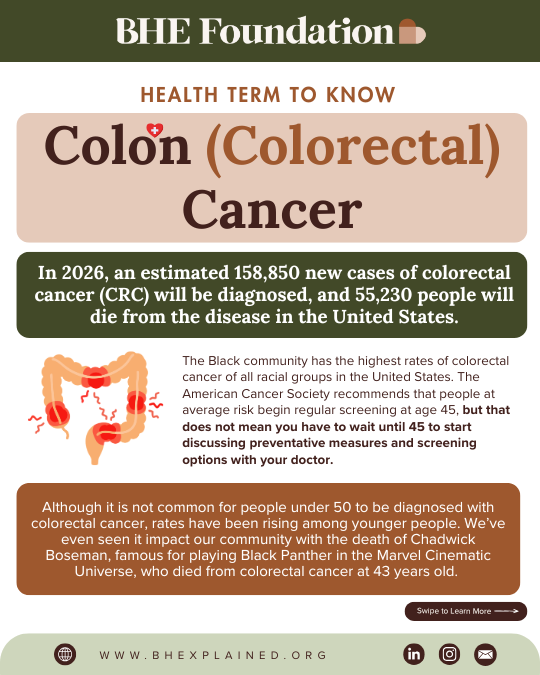
The Black community has the highest rates of colorectal cancer among all racial groups in the United States. Because rates have continued to rise, the American Cancer Society recommends that people at average risk begin regular screening at age 45.
However, that doesn't mean you should wait until your 45th birthday to start talking to your doctor.
Talk to Your Doctor Earlier If You Have:
A family history of colorectal cancer
A family history of certain colon polyps
A personal history of colorectal cancer or polyps
Inflammatory bowel diseases such as Crohn's disease or ulcerative colitis
Certain inherited conditions such as Lynch syndrome or FAP
A history of radiation treatment to the abdomen or pelvis
Types of Colorectal Cancer ScreeningStool-Based Tests
These non-invasive tests check your stool for signs of cancer.
Blood-Based Tests
These tests look for markers associated with colorectal cancer in the blood.
The important thing isn't which test you choose—it's making sure you get screened.
STI Testing: Let's Normalize It
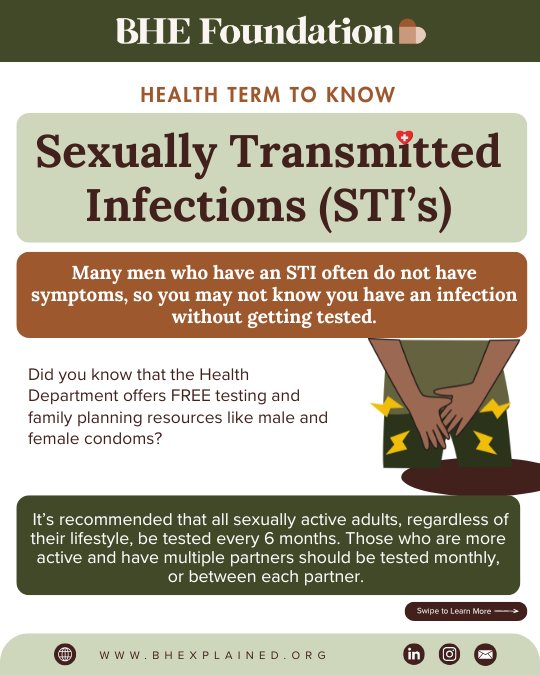
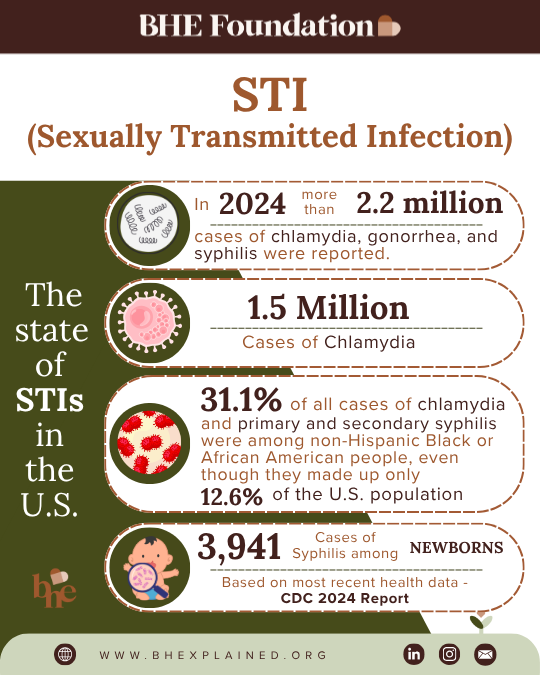
Here's another uncomfortable truth. Many sexually transmitted infections (STIs) have no symptoms. That's right.
* No burning.
* No itching.
* No obvious signs.
* Nothing.
Many men carry infections for months without knowing it. The only way to know your status is to get tested!
How often you should test depends on factors such as:
Age
Sexual history
Number of partners
Sexual practices
Symptoms
Ways To Get TestedAt Your Doctor's Office
This remains one of the most common options.
At-Home Rapid Tests
Some FDA-approved tests allow you to test yourself for conditions such as HIV, syphilis, gonorrhea, chlamydia, and trichomoniasis.
Mail-In Test Kits
You collect your own sample and send it to a laboratory for testing.
The Bottom Line
Going to the doctor probably isn't at the top of your list of favorite activities. Neither is paying bills. Neither is doing laundry.
But some things are necessary because they help us take care of ourselves. Your annual wellness visit is one of those things.
Knowing your blood pressure, glucose levels, cholesterol numbers, cancer screening recommendations, and STI status gives you information you can use to protect your health and your future.
This Men's Health Month, make the appointment.
Not next month.
Not when something starts hurting.
Not after your mama, wife, girlfriend, auntie, or best friend reminds you for the fifth time.
Schedule it now.
Then send this article to your brothers, cousins, friends, and barbershop group chat. Because staying healthy isn't just about living longer—it's about living better. And that's something every Black man deserves.

Know Your Risk. Know Your Numbers. Know Your Options.
Prostate health is about more than waiting for symptoms to appear. Knowing your risk factors and having an informed conversation with a healthcare provider can help you make decisions about screening and treatment.
Men should talk with their healthcare provider about prostate cancer risk, particularly if they are older, have a family history of prostate cancer, or are Black.
Your prostate health is part of your overall health—and knowing what is normal for you can help you recognize when something has changed.