
Understanding Skin Cancer: Essential Insights for Black Men and Women
YES! You Should Wear Sunscreen
Summary:It’s Skin Cancer Awareness month! A common misconception is that Black people do not get skin cancer. But we definitely can. In this post, we discuss skin cancer, detection, and how to prevent it. As the warmer months approach, we want to make sure you are taking care of yourself as you enjoy the weather.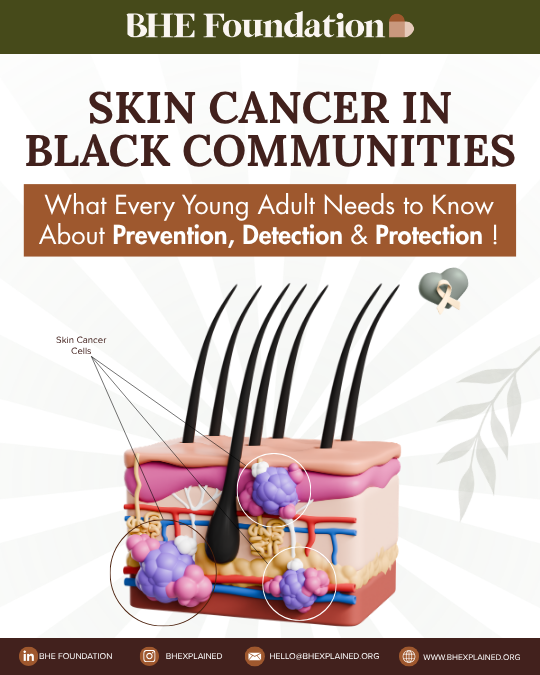
Spring is here, and Summer is on the way. We’re running in parks. Hot girl walks are in full swing. Summer music festivals and trips to the beach are being planned. As the weather gets warmer, more of us will be outside to get some fresh air and enjoy the weather. But, as we head outside, we have to protect our skin. May is Skin Cancer Awareness Month, and we want to make sure you are aware of the possible consequences of not protecting yourself from harmful UV rays.
Your Skin, Your Shield: Why It Matters
We spend a lot of time talking about skincare routines for our faces, but what about the rest of our body? Real skin care goes beyond what’s visible in the mirror. It’s about protecting and maintaining all of your skin.
When it comes to overall health, skin often takes a backseat in the conversation, even though it plays a major role in keeping your body functioning properly. Your skin isn’t just about appearance; it’s your body’s first line of defense. As the largest organ, it protects you from heat, sunlight, injury, and infection, while also helping regulate body temperature and store essential nutrients like vitamin D, water, and fat.
To really take care of your skin, it helps to understand how it works. Your skin is made up of multiple layers, with the two most important being the epidermis (the outer layer) and the dermis (the inner layer). The epidermis acts as your protective shield, while the dermis supports it with strength, elasticity, and essential functions like sweat and oil production.
The outer layer of your skin, called the epidermis, is where skin cancer begins. It’s made up of three key cells:
Squamous cells (the surface layer)
Basal cells (just beneath the surface)
Melanocytes (cells that produce melanin, giving your skin its color)
The Basics of Skin Cancer
Skin cancer affects over 5 million individuals in the United States each year, with Black individuals representing 1-2% of those cases. The three primary types include:
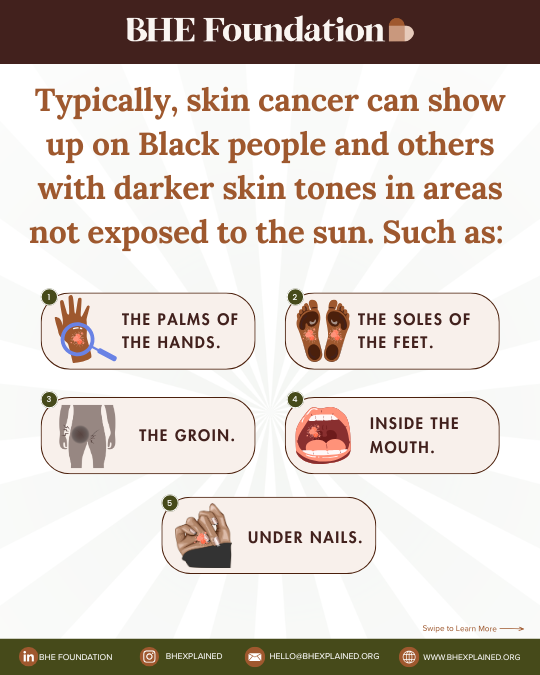
1. Melanoma: While the least common, melanoma is the most aggressive form of skin cancer. It often starts in the epidermis and can spread quickly to other body parts, making it crucial to catch early. In fact, Black patients have a five-year survival rate of about 70%, starkly lower than the 94% rate for white patients. In Black individuals, melanoma frequently appears in less sun-exposed areas like the palms of the hands or the soles of the feet.
2. Squamous Cell Carcinoma: This most common form of skin cancer in Black people originates from squamous cells and is often linked to sun exposure.
3. Basal Cell Carcinoma: Arising from the basal cells in the epidermis, this cancer typically appears as a small bump or sore that grows slowly. Thankfully, it rarely spreads to other body parts.

Let’s Clear This Up: Skin Cancer Does Affect Black People
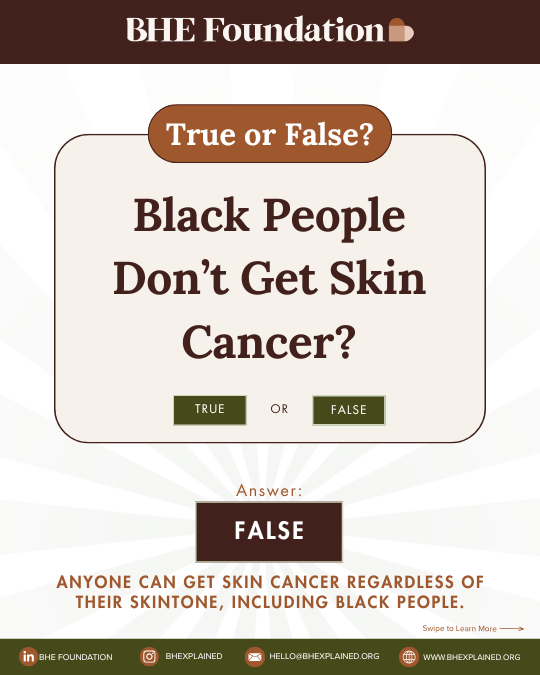
You may have heard, “Black people don’t get skin cancer.” That myth has been passed around for years—but it’s simply not true.
While skin cancer is less common in Black communities, it often shows up later and more aggressively. That delay in diagnosis leads to worse outcomes.
Why is this the case?
- Lower Awareness: There’s a general lack of awareness about skin cancer risks among people of color.
- Healthcare Gaps: Healthcare professionals might have a lower suspicion for skin cancer in patients of color, leading to fewer routine checks.
- Hidden Locations: Skin cancers in people of color often develop in less visible areas, making early detection challenging.
So, while it’s less common, it’s often more dangerous when overlooked. That’s why self-awareness is so important.
What to Look For: Know Your Skin
If something on your skin doesn’t look right or doesn’t heal, don’t ignore it. Early detection can make all the difference. Check your body regularly—including areas you might overlook.
Pay attention to:
New growths or moles
Changes in existing moles or scars
Sores that don’t heal
Dark spots or streaks under nails
Patches of skin that change color
Early Detection is Key!
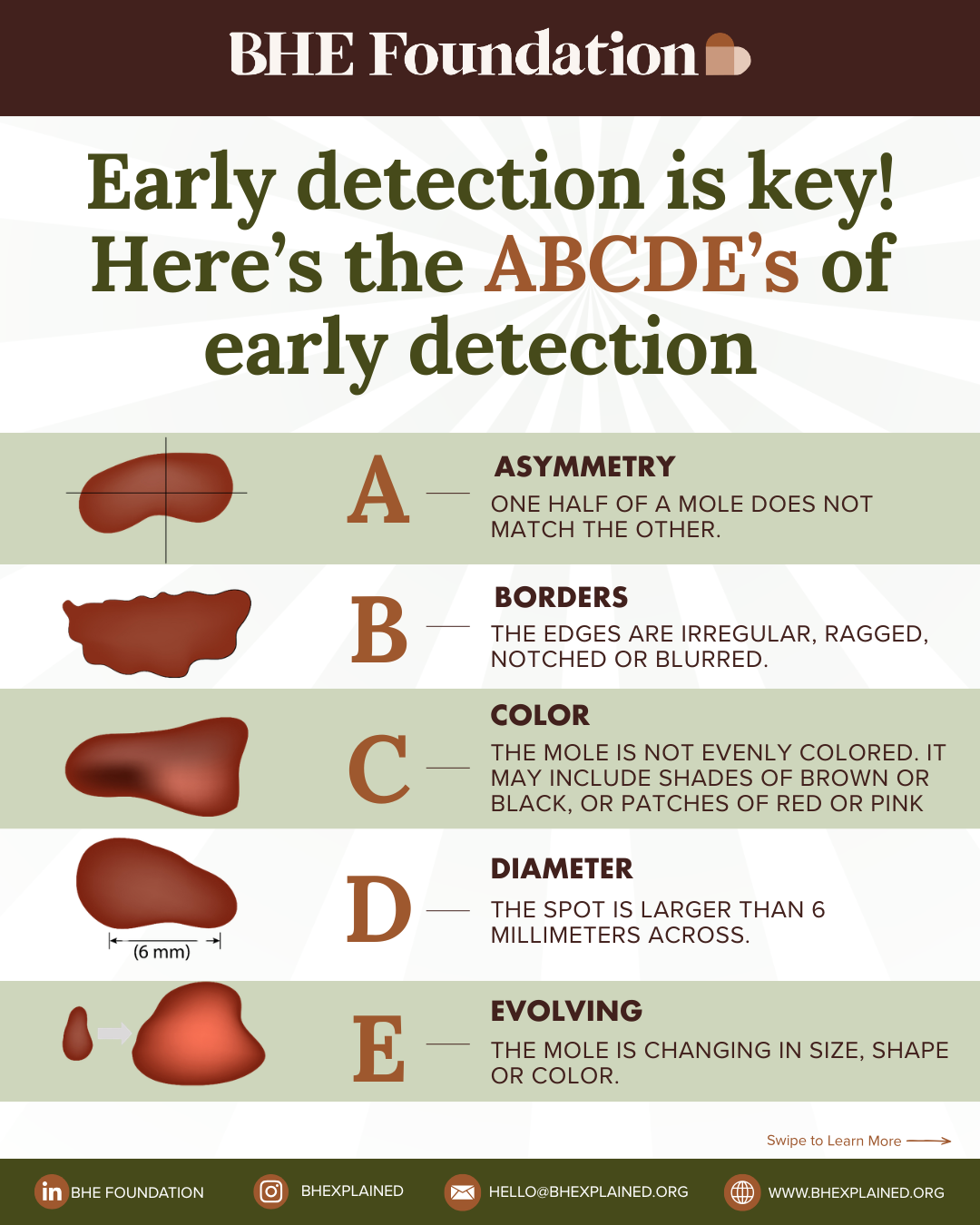
Use the ABCDE Rule for Moles:
A – Asymmetry: One half doesn’t match the other
B – Border: Edges are uneven or irregular
C – Color: Multiple shades or unusual coloring
D – Diameter: Larger than 6 mm (about a pencil eraser)
E – Evolving: Changes over time If you notice any of these signs, talk to a healthcare provider.
Prevention: Yes, Sunscreen Is for Us Too
Let’s be real—sunscreen hasn’t always been marketed to us, but it should be part of your routine. Skin cancer is one of the most preventable cancers, and protection starts with limiting UV exposure.
Here’s how to protect your skin daily:
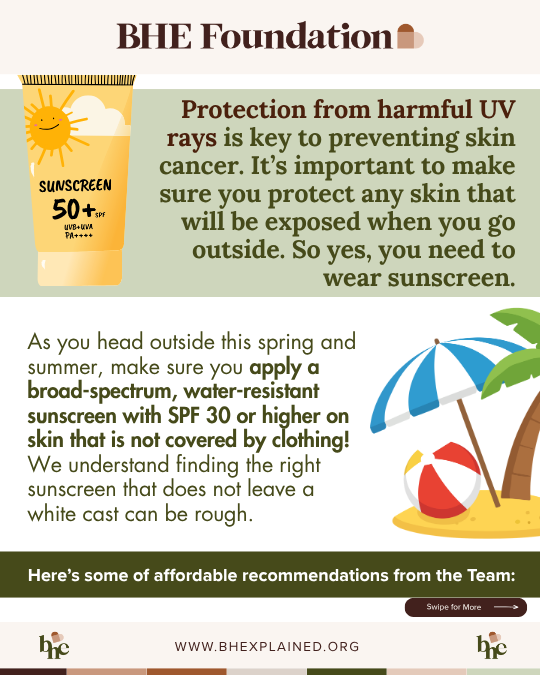
Use a broad-spectrum sunscreen (SPF 30 or higher)
If you’re going to be outside for prolonged periods of time, go for one with a higher SPF (greater than 50)
Apply it to all exposed skin—even on cloudy days
Reapply every 2 hours, especially if you’re sweating or swimming
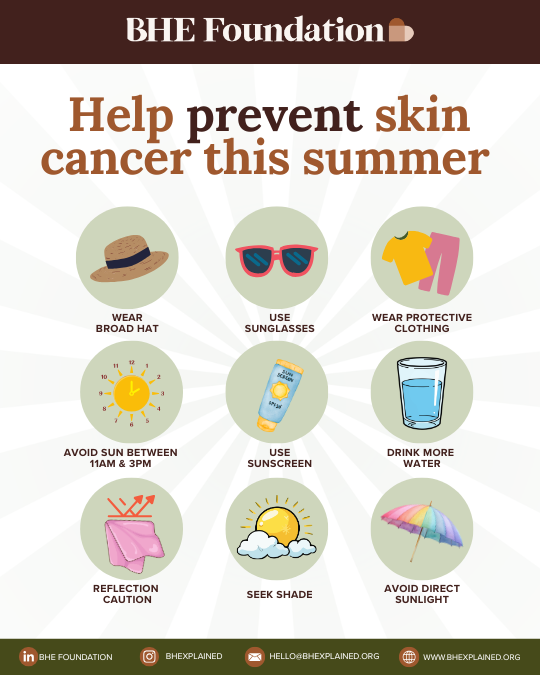
Wear protective clothing like hats and sunglasses
Seek shade during peak sun hours
What is SPF and Why does it Matter?
SPF is a measure of how much solar energy (UV radiation) is required to produce sunburn on protected skin (i.e., in the presence of sunscreen) relative to the amount of solar energy required to produce sunburn on unprotected skin. Simply put: As the SPF value increases, sunburn protection increases.
There is a popular misconception that SPF relates to time of solar exposure. For example, many consumers believe that, if they normally get sunburn in one hour, then an SPF 15 sunscreen allows them to stay in the sun 15 hours (i.e., 15 times longer) without getting sunburn. This is not true because SPF is not directly related to time of solar exposure but to amount of solar exposure. Although solar energy amount is related to solar exposure time, there are other factors that impact the amount of solar energy.
The Bottom Line
Understanding your skin isn’t just about achieving a glow—it’s about protecting your health. And that includes being aware of potential risks, like skin cancer, which can affect anyone regardless of skin tone.
As you embrace the warmth of spring and summer, don’t forget the importance of sun protection. Melanin may provide some natural defense, but it does not eliminate the risk of skin cancer. By wearing sunscreen and protective clothing, you can significantly reduce your risk. Let's empower ourselves with knowledge and take proactive steps towards healthier skin.
Taking care of your skin starts with awareness—because healthy skin is more than a routine, it’s a lifestyle. Stay informed, stay protected, and enjoy every moment this season has to offer!


Know Your Risk. Know Your Numbers. Know Your Options.
Prostate health is about more than waiting for symptoms to appear. Knowing your risk factors and having an informed conversation with a healthcare provider can help you make decisions about screening and treatment.
Men should talk with their healthcare provider about prostate cancer risk, particularly if they are older, have a family history of prostate cancer, or are Black.
Your prostate health is part of your overall health—and knowing what is normal for you can help you recognize when something has changed.