
🩺 Navigating the Healthcare System: How to Advocate for Yourself at the Doctor
Ever walked into a doctor’s office and felt like you left your brain and pain at the door? You’re not alone! The doctor’s visit can be a daunting experience, especially as we reach our 30s and 40s and face more exams and check-ups. For many Black Americans, these visits can be especially nerve-wracking due to systemic barriers, biases, and disparities in healthcare.
As we gear up for health insurance open enrollment in October, it’s time to take charge! If you haven’t had your annual check-up, now is the perfect moment. Get ready to become your own best health advocate; we’ve got you covered with essential patient advocacy tips to ensure you get the care you deserve.

The Reality of Healthcare Disparities
Racial and ethnic disparities in health care are real and persist in the U.S. today. Black Americans are 1.5 times more likely to be uninsured than their white counterparts, and they are 30% more likely to suffer from chronic conditions like heart disease and high blood pressure.In 2024, approximately 39.9 million people in the U.S. identified as non-Hispanic Black or African American, accounted for 11.9% of the population. Considering the striking statistics from the CDC, where life expectancy for Black Americans is about four years lower than the national average, it’s crucial to take proactive steps in managing our health.Let’s change those numbers by taking control of your health and advocating for yourself during medical visits. Here’s how!
🗣️ Patient Advocacy Tips: What to Say at the Doctor
Questions to Ask Your Doctor:Preparing for your doctor’s appointment? It’s a smart move to write down your questions ahead of time. This ensures you won’t overlook anything important during the visit. Remember, open communication is key—your healthcare provider is there to support you!
Don’t hesitate to ask questions! Here are some you might consider:· What are my health risks based on my family history?· Can you explain my diagnosis in simple terms?· What are the pros and cons of this treatment?· When should I schedule my next appointment?· Are there alternative treatment options?⬇️When to Get a Second Opinion:
Seeking a second opinion can be intimidating; it may feel like questioning your healthcare provider’s expertise. However, your health should always come first, and sometimes, two heads are indeed better than one! If something feels off:If something doesn’t sit right with you:· Trust your instincts. It’s your health, after all.· Consult another healthcare provider for a fresh perspective, especially for serious conditions or complex procedures.· Something doesn’t feel right about your diagnosis· Your symptoms are being dismissed or not improving· A major procedure or surgery is recommended· You want more clarity on your treatment options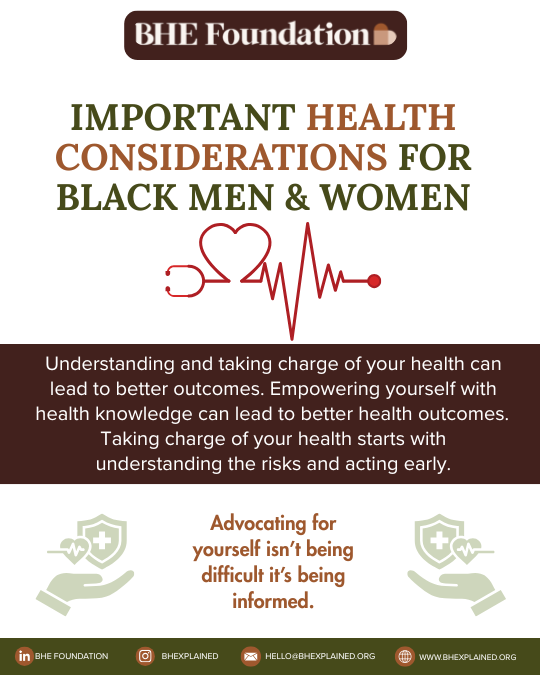
Tracking Your Health Records:
Keeping track of your health information is a powerful form of self-advocacy. Having a close eye on your records over time is crucial for understanding your progress, falling ill, or noticing changes. When your records are organized, you can make better decisions and have more productive conversations with your doctor.
Knowledge is power! Here’s how to stay organized:· Maintain a personal health record that includes all your medical history, diagnoses, medications, and allergies.· Use health apps to track symptoms and medication dosages, helping you stay informed during appointments.· Save copies of lab results and visit summaries· Bring your records to appointments when possibleUnderstanding Lab Results:Lab tests are a vital part of assessing your health; they help us compare your results to national averages. However, it’s important to note that some lab results may be less accurate for Black Americans, so keep that in mind when interpreting your results. Collaborate with your provider to identify which tests are relevant to your individual health needs.
Lab results can be confusing. Here’s how to make sense of them:· Ask your doctor to break down any medical jargon.· Request explanations for any abnormal results.· Keep a record of your results over time to track changes.· Ask: “Is this normal for me specifically?”Lifetime Preventive Care Checklist
Staying proactive with your health checks is essential for everyone, particularly for Black men and women facing unique health risks. Here's a tailored checklist of recommended exams and wellness checks per age group:
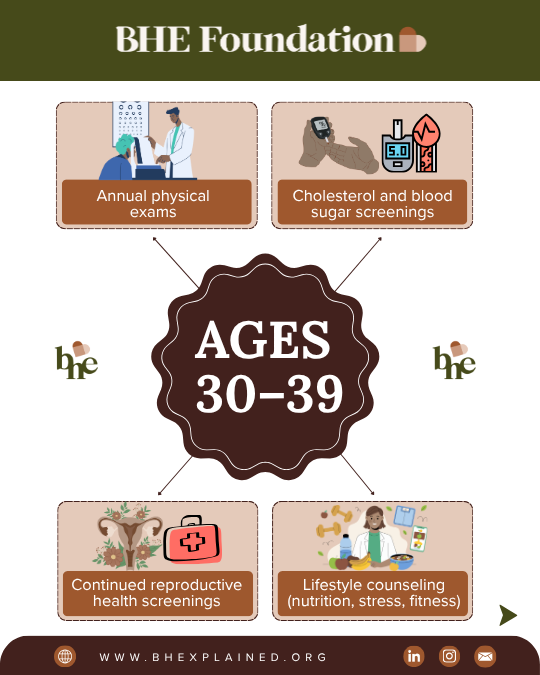
🧑🏾 Ages 30–39
Annual physical exams
Cholesterol and blood sugar screenings
Continued reproductive health screenings
Lifestyle counseling (nutrition, stress, fitness)
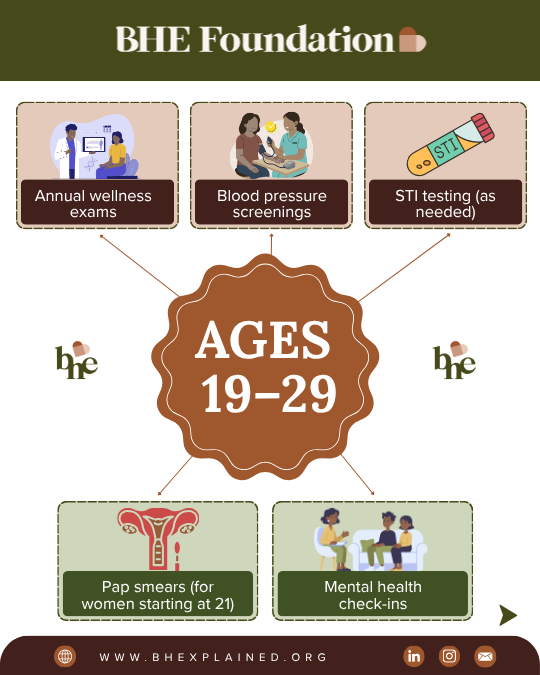
🧑🏾 Ages 19–29
Annual wellness exams
Blood pressure screenings
STI testing (as needed)
Pap smears (for women starting at 21)
Mental health check-ins
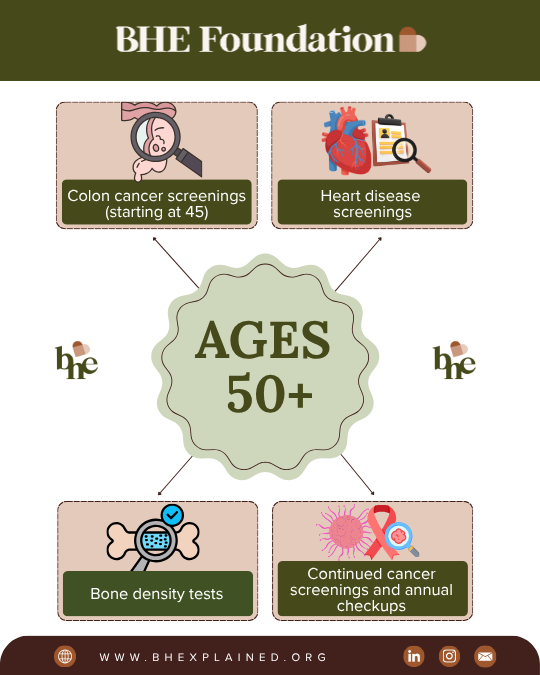
🧑🏾 Ages 50+
Colon cancer screenings (starting at 45)
Heart disease screenings
Bone density tests
Continued cancer screenings and annual checkups
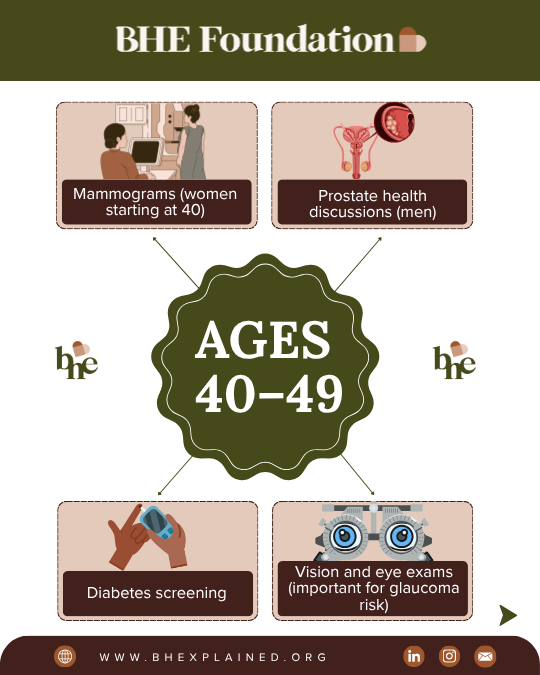
🧑🏾 Ages 40–49
Mammograms (women starting at 40)
Prostate health discussions (men)
Diabetes screening
Vision and eye exams (important for glaucoma risk)
Important Health Considerations for Black Men & Women
Understanding and taking charge of your health can lead to better outcomes. Empowering yourself with health knowledge can lead to better health outcomes. Focus on these critical issues: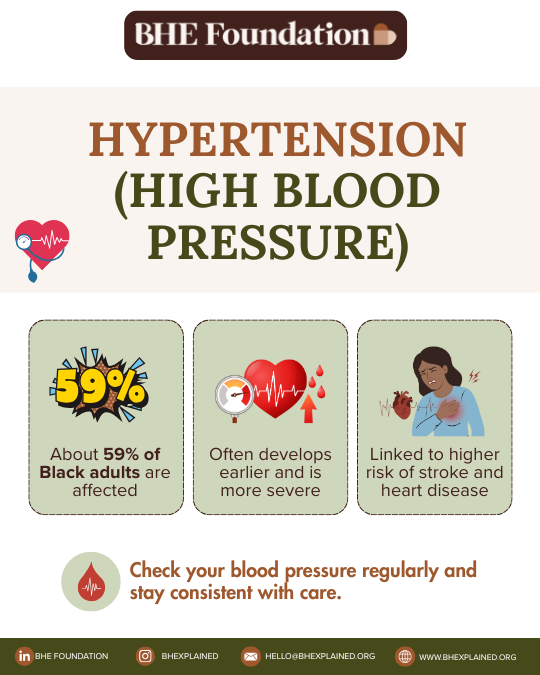

Hypertension: Black adults have one of the highest rates of hypertension in the world, with 59% affected. Blood pressure levels tend to be higher and can start at a younger age. Regular monitoring is crucial.


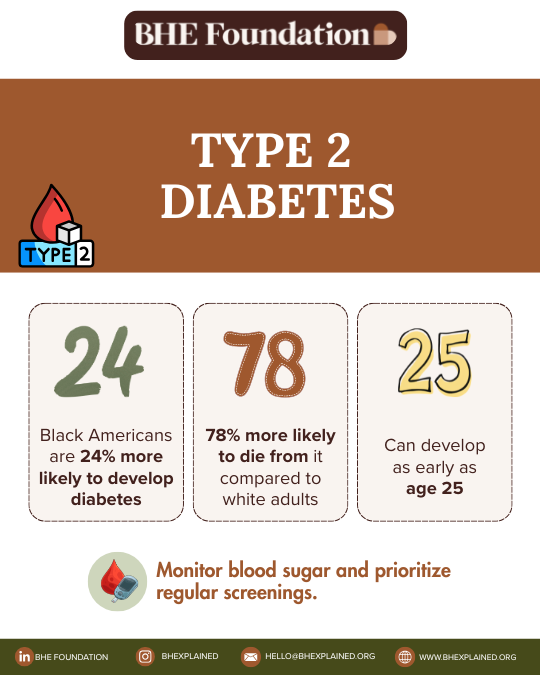
Type 2 Diabetes: This condition disproportionately impacts Black Americans, who are 24% more likely to be diagnosed compared to white adults and face a 78% higher mortality rate. Many develop diabetes earlier, sometimes as young as 25. Factors contributing to this disparity include limited health access, poor dietary options, and systemic stressors.


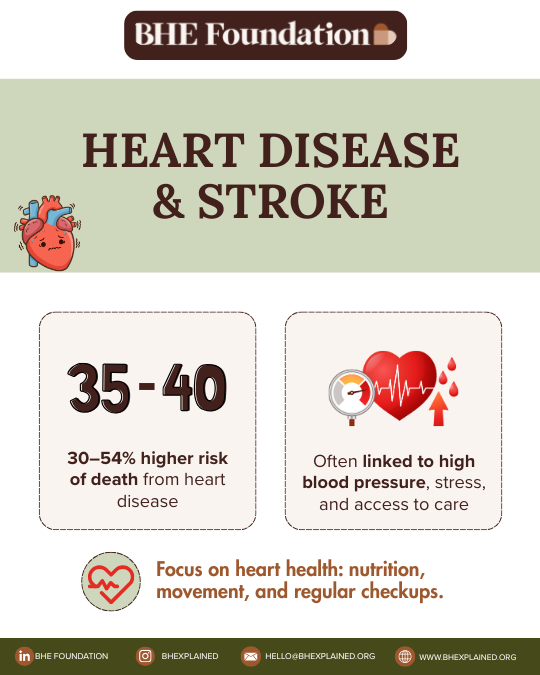
Heart Health: Black Americans have a significantly higher risk of cardiovascular disease, facing a 30% to 54% increased likelihood of death from heart disease. Contributing factors include high rates of hypertension, obesity, and diabetes, along with structural inequities in healthcare access. Prioritize regular heart screenings and make healthy lifestyle choices.


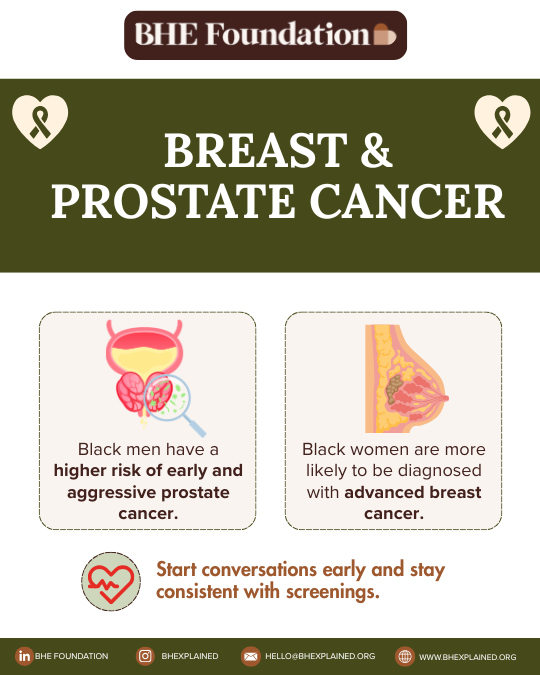
Screenings for Breast and Prostate Cancer: Black men are at an increased risk of developing prostate cancer and often face a diagnosis 3 to 9 years earlier than other groups. Likewise, Black women are more likely to be diagnosed with breast cancer at an advanced stage and have lower survival rates compared to their white counterparts. Early discussions with your healthcare provider can lead to more tailored and effective screening strategies.
Vitamin D Deficiency - Vitamin D deficiency is a significant health issue, particularly for Black individuals due to higher melanin levels in their skin. People with darker skin have a 15–20 times higher prevalence of severe vitamin D deficiency because melanin acts as a natural sunscreen. This reduces the skin's ability to produce vitamin D from sunlight by up to 99%. Consequently, dark-skinned individuals require 3 to 6 times more sun exposure to achieve the same levels of vitamin D as their lighter-skinned counterparts.
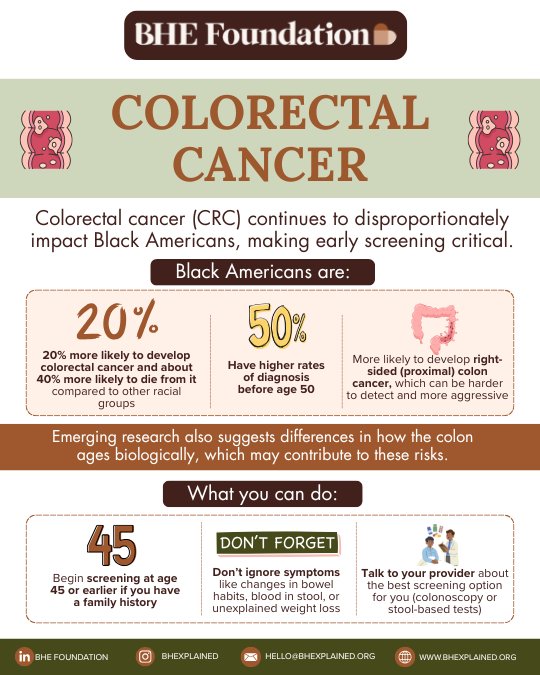
Colorectal Cancer –Colorectal cancer (CRC) disproportionately affects Black Americans, with the highest incidence and mortality rates among any racial or ethnic group. Here are some crucial statistics to know:- Black individuals are approximately 20% more likely to develop colorectal cancer and 40% more likely to die from it compared to other groups.- The incidence of CRC is increasingly diagnosed in younger Black individuals, with cases before age 50 being twice as high as in white Americans.- There is a concerning trend of Black individuals being over four times more likely to develop proximal (right-sided) colon cancer, which tends to be more aggressive and harder to detect.
Research indicates that biological aging of the colon occurs faster on the right side than the left in African Americans. This accelerated aging process may explain the higher prevalence of right-sided tumors in this population.Early screening is critical! The CDC recommends that screening for colorectal cancer begin at age 45, particularly for those in high-risk groups. Having open conversations about your family history and concerns with your healthcare provider can help you make informed decisions about when to begin screening and what methods are best for you.
Conclusion:
Take charge of your health today! Equip yourself with these tools and resources to actively participate in your healthcare journey. As a community, we can uplift one another, advocate for better health, and bridge the healthcare disparities affecting our families. Don’t wait for someone else to take charge of your health—step into that doctor’s office with confidence and clarity.
It's time to make your health a priority! When it comes to healthcare, remember: you are your best advocate.


Know Your Risk. Know Your Numbers. Know Your Options.
Prostate health is about more than waiting for symptoms to appear. Knowing your risk factors and having an informed conversation with a healthcare provider can help you make decisions about screening and treatment.
Men should talk with their healthcare provider about prostate cancer risk, particularly if they are older, have a family history of prostate cancer, or are Black.
Your prostate health is part of your overall health—and knowing what is normal for you can help you recognize when something has changed.