
Health Terms Every Black Adult Should Understand
Have you ever walked out of a doctor’s appointment replaying the conversation in your head because you weren’t completely sure what the provider meant? Maybe your lab results mentioned “hemoglobin,” “risk factors,” or “benign,” and suddenly you found yourself searching online for answers. Or maybe you nodded during the visit because the medical language sounded familiar — even though you weren’t fully confident about what it actually meant.
You are not alone.
For many Black Americans, navigating the healthcare system can feel overwhelming. Medical conversations often move fast, healthcare information can sound highly clinical, and too many patients are expected to understand complicated terminology without explanation. But understanding healthcare language is more than just knowing medical words, it is a critical part of health literacy.
Health literacy is the ability to understand, process, and use health information to make informed decisions about your care.
Research consistently shows that people with stronger health literacy are more likely to manage chronic conditions, ask informed questions, seek preventive care, and advocate for themselves within the healthcare system. This matters deeply in Black communities, where conditions such as hypertension, diabetes, stroke, heart disease, maternal health complications, and certain cancers continue to disproportionately impact health outcomes.
Understanding common health terms can help close information gaps, improve communication with providers, and empower individuals to make informed decisions for themselves and their families. At BHE Foundation, we believe knowledge is a form of self-advocacy. The more informed you are, the more confident you can become in protecting your health, understanding your care, and recognizing when something does not feel right.
This week, we are breaking down important health terms every adult should know — explained in clear, accessible language designed to help you better navigate today’s healthcare system. Because informed patients ask better questions, make stronger decisions, and create healthier futures.
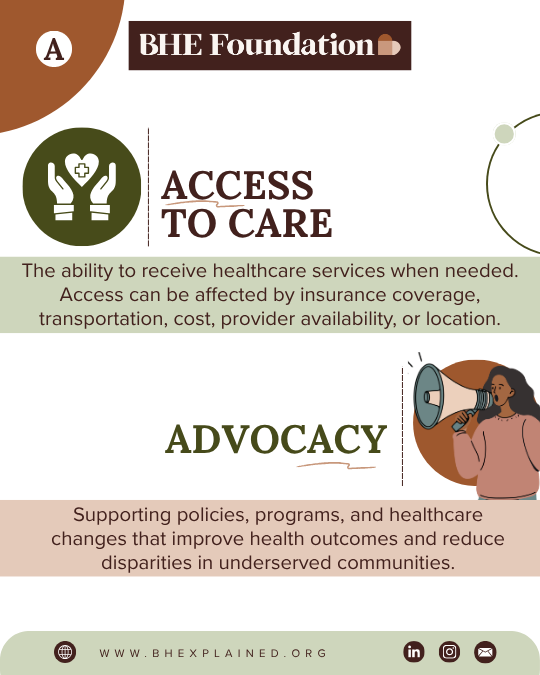
A
Access to Care
The ability to receive healthcare services when needed. Access can be affected by insurance coverage, transportation, cost, provider availability, or location.
Advocacy
Supporting policies, programs, and healthcare changes that improve health outcomes and reduce disparities in underserved communities.
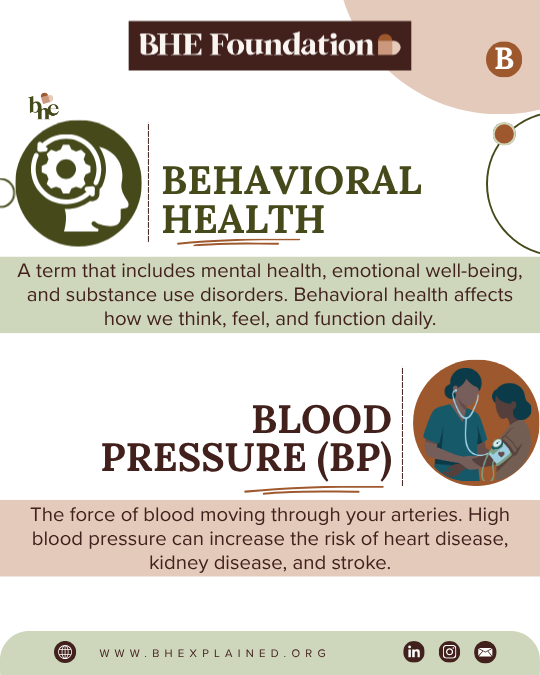
B
Behavioral Health
A term that includes mental health, emotional well-being, and substance use disorders. Behavioral health affects how we think, feel, and function daily.
Blood Pressure (BP)
The force of blood moving through your arteries. High blood pressure can increase the risk of heart disease, kidney disease, and stroke.
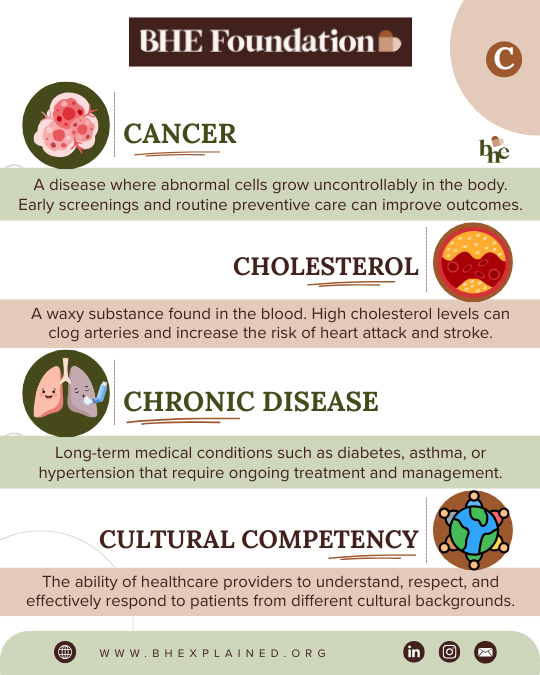
C
Cancer
A disease where abnormal cells grow uncontrollably in the body. Early screenings and routine preventive care can improve outcomes.
Cholesterol
A waxy substance found in the blood. High cholesterol levels can clog arteries and increase the risk of heart attack and stroke.
Chronic Disease
Long-term medical conditions such as diabetes, asthma, or hypertension that require ongoing treatment and management.
Cultural Competency
The ability of healthcare providers to understand, respect, and effectively respond to patients from different cultural backgrounds.
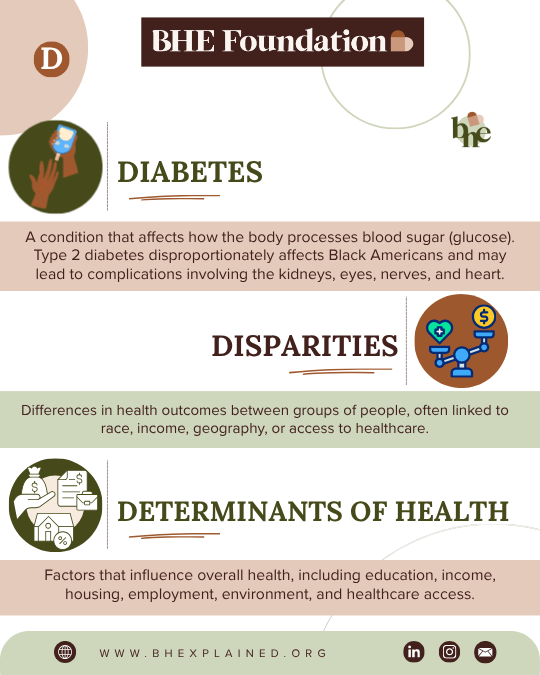
D
Determinants of Health
Factors that influence overall health, including education, income, housing, employment, environment, and healthcare access.
Diabetes
A condition that affects how the body processes blood sugar (glucose). Type 2 diabetes disproportionately affects Black Americans and may lead to complications involving the kidneys, eyes, nerves, and heart.
Disparities
Differences in health outcomes between groups of people, often linked to race, income, geography, or access to healthcare.
E-G
Engagement
Taking an active role in your healthcare by asking questions, attending appointments, understanding medications, and following treatment plans.
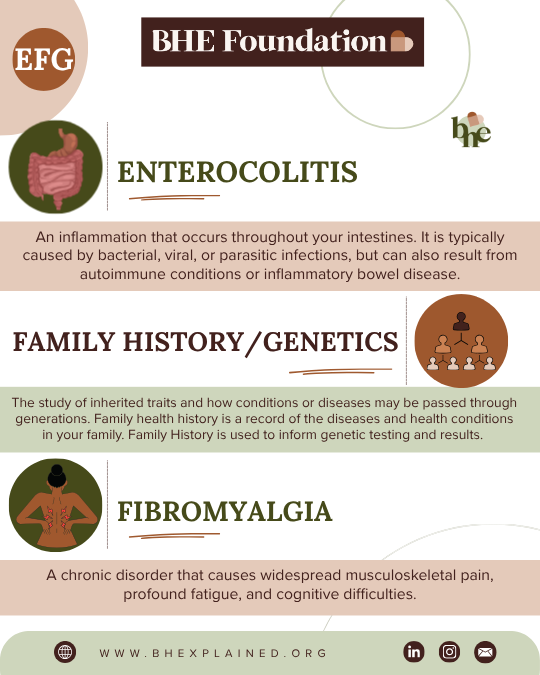
Enterocolitis
An inflammation that occurs throughout your intestines. It is typically caused by bacterial, viral, or parasitic infections, but can also result from autoimmune conditions or inflammatory bowel disease.
Family History
Medical conditions that occur among close relatives and may increase your personal risk for certain diseases.
Fibromyalgia
A chronic disorder that causes widespread musculoskeletal pain, profound fatigue, and cognitive difficulties.
Genetics
The study of inherited traits and how conditions or diseases may be passed through generations.
H
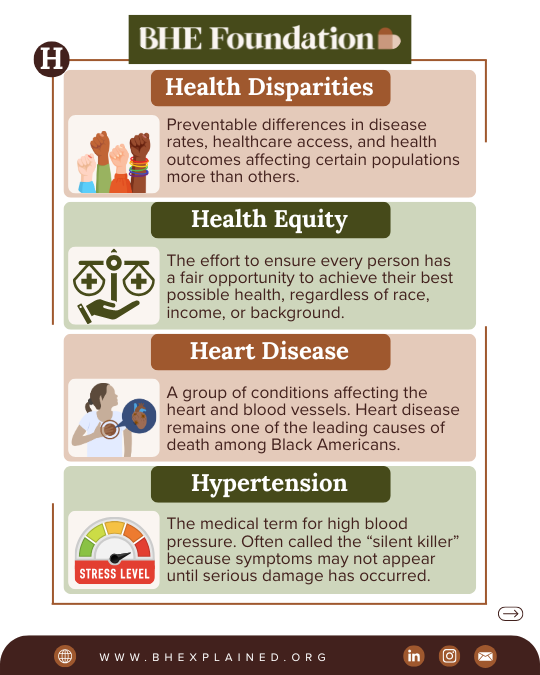
Health Disparities
Preventable differences in disease rates, healthcare access, and health outcomes affecting certain populations more than others.
Heart Disease
A group of conditions affecting the heart and blood vessels. Heart disease remains one of the leading causes of death among Black Americans.
Health Equity
The effort to ensure every person has a fair opportunity to achieve their best possible health, regardless of race, income, or background.
Hypertension
The medical term for high blood pressure. Often called the “silent killer” because symptoms may not appear until serious damage has occurred.
I
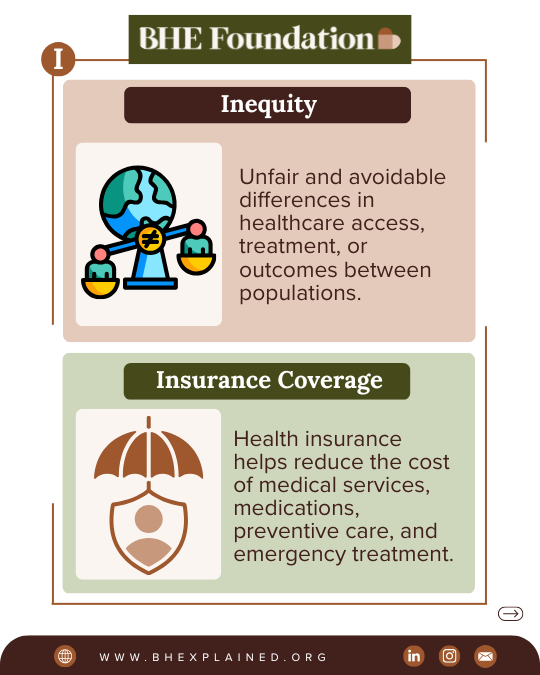
Inequity
Unfair and avoidable differences in healthcare access, treatment, or outcomes between populations.
Insurance Coverage
Health insurance helps reduce the cost of medical services, medications, preventive care, and emergency treatment.
J-L
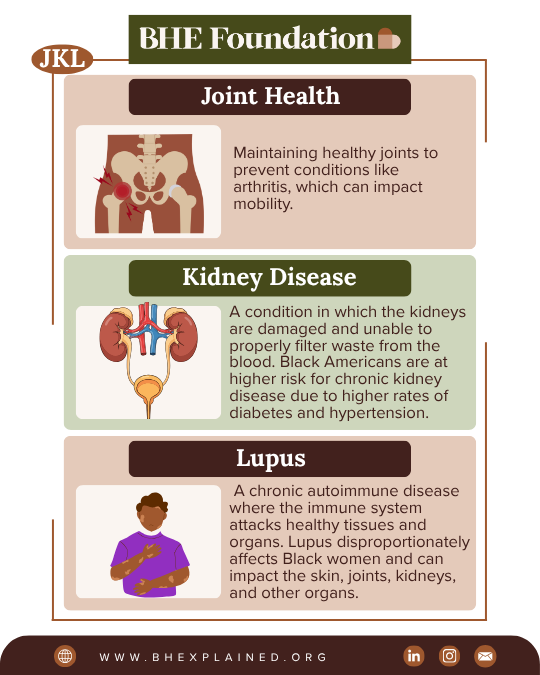
Joint Health
Maintaining healthy joints to prevent conditions like arthritis, which can impact mobility.
Kidney Disease
A condition in which the kidneys are damaged and unable to properly filter waste from the blood. Black Americans are at higher risk for chronic kidney disease due to higher rates of diabetes and hypertension.
Lupus
A chronic autoimmune disease where the immune system attacks healthy tissues and organs. Lupus disproportionately affects Black women and can impact the skin, joints, kidneys, and other organs.
M
Maternal Health
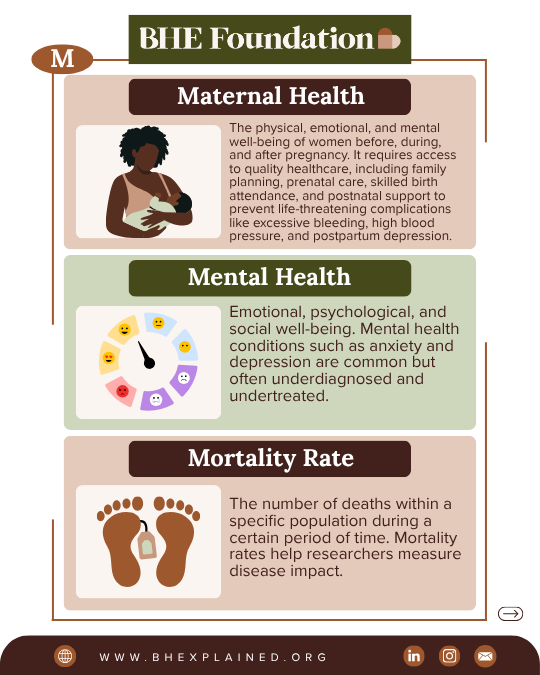
The physical, emotional, and mental well-being of women before, during, and after pregnancy. It requires access to quality healthcare, including family planning, prenatal care, skilled birth attendance, and postnatal support to prevent life-threatening complications like excessive bleeding, high blood pressure, and postpartum depression.
Mental Health
Emotional, psychological, and social well-being. Mental health conditions such as anxiety and depression are common but often underdiagnosed and undertreated.
Mortality Rate
The number of deaths within a specific population during a certain period of time. Mortality rates help researchers measure disease impact.
N
Non-Communicable Diseases
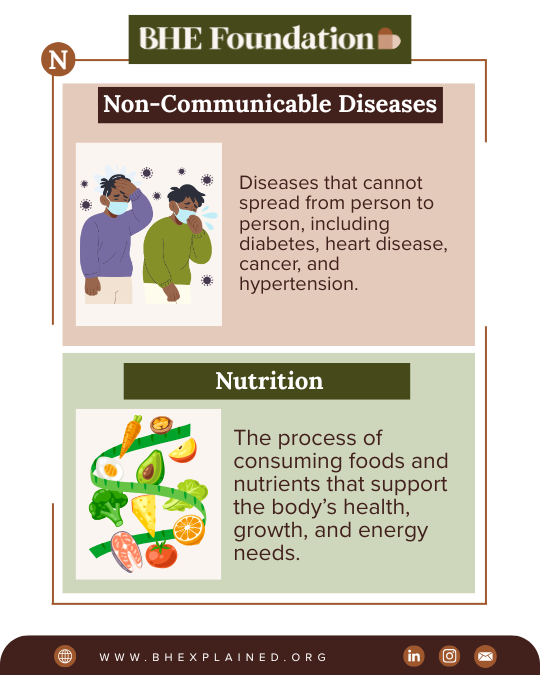
Diseases that cannot spread from person to person, including diabetes, heart disease, cancer, and hypertension.
Nutrition
The process of consuming foods and nutrients that support the body’s health, growth, and energy needs.
Obesity
A medical condition involving excess body fat that increases the risk for chronic diseases including diabetes, sleep apnea, and heart disease.
Osteoporosis
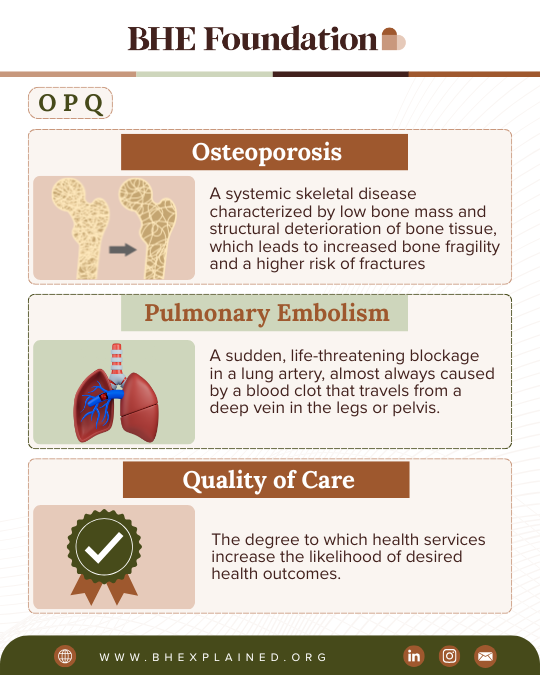
A systemic skeletal disease characterized by low bone mass and structural deterioration of bone tissue, which leads to increased bone fragility and a higher risk of fractures.
Preventive Care
Healthcare services such as screenings, vaccinations, annual physicals, and wellness visits designed to prevent illness before symptoms develop.
Pulmonary Embolism
A sudden, life-threatening blockage in a lung artery, almost always caused by a blood clot that travels from a deep vein in the legs or pelvis
Quality of Care
The degree to which health services increase the likelihood of desired health outcomes.
Red Blood Cells
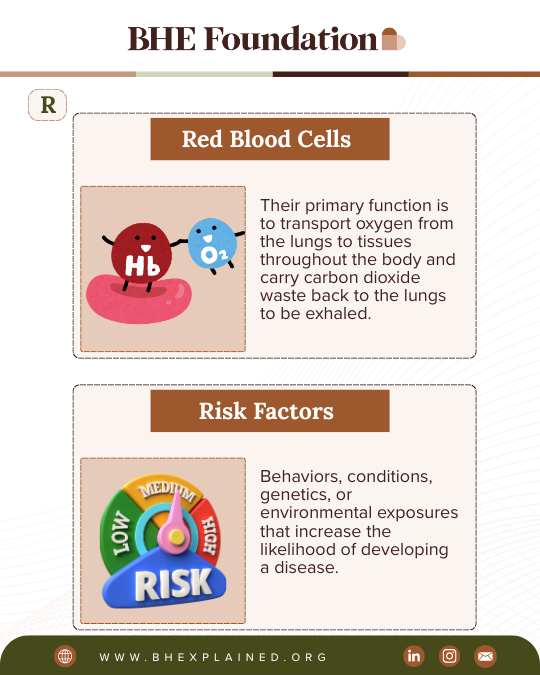
Their primary function is to transport oxygen from the lungs to tissues throughout the body and carry carbon dioxide waste back to the lungs to be exhaled.
Risk Factors
Behaviors, conditions, genetics, or environmental exposures that increase the likelihood of developing a disease.
S
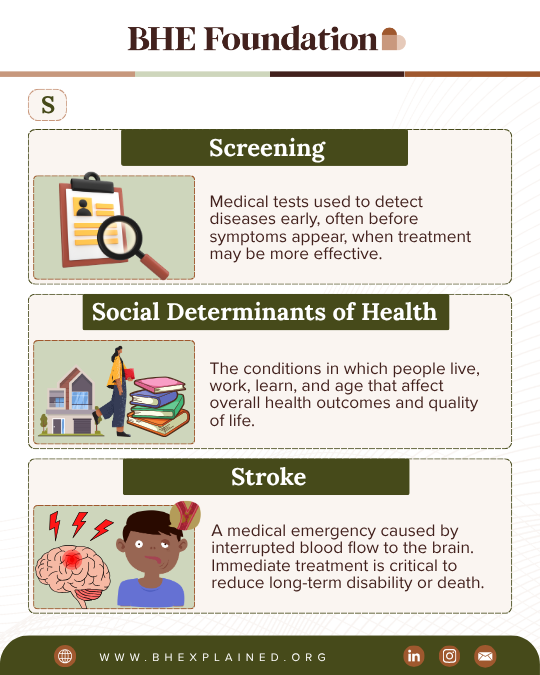
Screening
Medical tests used to detect diseases early — often before symptoms appear — when treatment may be more effective.
Social Determinants of Health
The conditions in which people live, work, learn, and age that affect overall health outcomes and quality of life.
Stroke
A medical emergency caused by interrupted blood flow to the brain. Immediate treatment is critical to reduce long-term disability or death.
T-V
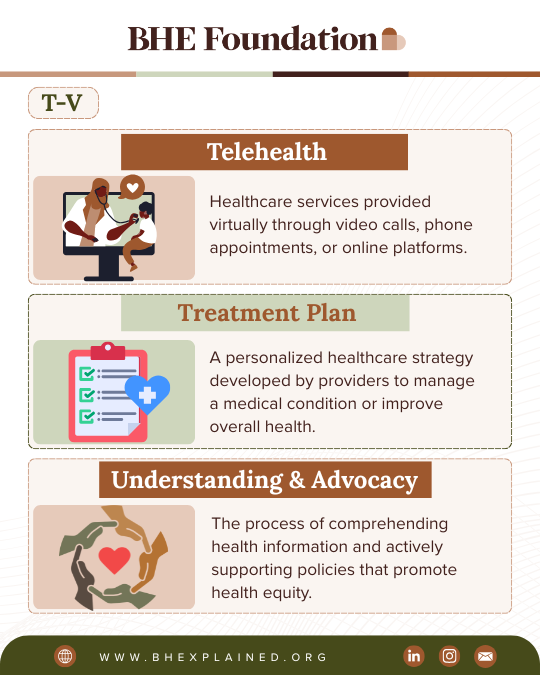
Telehealth
Healthcare services provided virtually through video calls, phone appointments, or online platforms.
Treatment Plan
A personalized healthcare strategy developed by providers to manage a medical condition or improve overall health.
Understanding & Advocacy
The process of comprehending health information and actively supporting policies that promote health equity.
W-Z
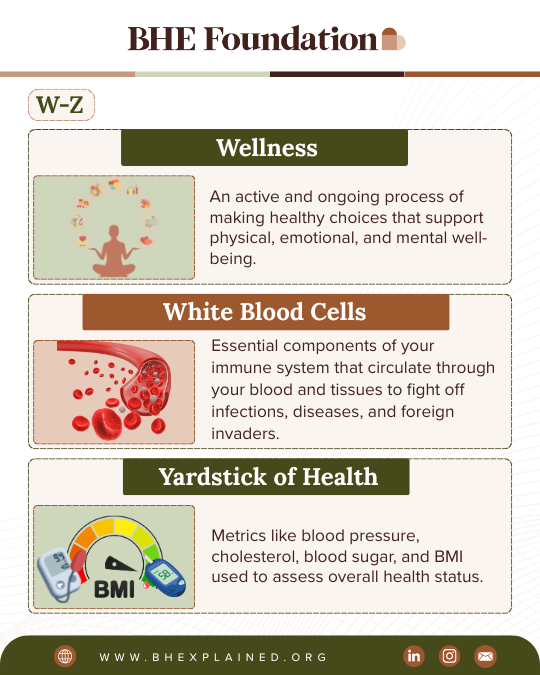
Wellness
An active and ongoing process of making healthy choices that support physical, emotional, and mental well-being.
White Blood Cells
Essential components of your immune system that circulate through your blood and tissues to fight off infections, diseases, and foreign invaders.
White Coat Syndrome
Anxiety caused by medical environments that can temporarily raise blood pressure readings.
Yardstick of Health
Metrics like blood pressure, cholesterol, blood sugar, and BMI used to assess overall health status.
Why Understanding Health Terms Matters
Knowing healthcare terminology is not about memorizing complicated medical language. It is about feeling informed, confident, and prepared when making decisions about your health.
Understanding these terms can help you:
Communicate more effectively with healthcare providers
Better understand diagnoses and lab results
Recognize symptoms earlier
Ask informed questions during appointments
Make confident healthcare decisions
Advocate for yourself and your loved ones
Improve long-term health outcomes
Health information should not feel exclusive or confusing. Everyone deserves clear, understandable healthcare communication.
The more you understand the language of health, the more power you gain in protecting your well-being.
Because health is wealth — and informed communities create healthier futures.

Know Your Risk. Know Your Numbers. Know Your Options.
Prostate health is about more than waiting for symptoms to appear. Knowing your risk factors and having an informed conversation with a healthcare provider can help you make decisions about screening and treatment.
Men should talk with their healthcare provider about prostate cancer risk, particularly if they are older, have a family history of prostate cancer, or are Black.
Your prostate health is part of your overall health—and knowing what is normal for you can help you recognize when something has changed.