Summer Safety & CPR: A Critical Guide for Black Health Literacy
Would You Know What to Do in an Emergency? 🚑
Summer means pool parties, beach trips, family reunions, cookouts, and vacations. It's a season filled with memories—but it also comes with increased health and safety risks.
Would you know what to do if someone suddenly stopped breathing?
Most people assume CPR is something only doctors, nurses, or EMTs need to know. The truth is that most cardiac arrests happen outside of hospitals, often in homes or public places where family, friends, or strangers are the first people on the scene.
Knowing CPR can mean the difference between life and death.
This is especially important in the Black community.
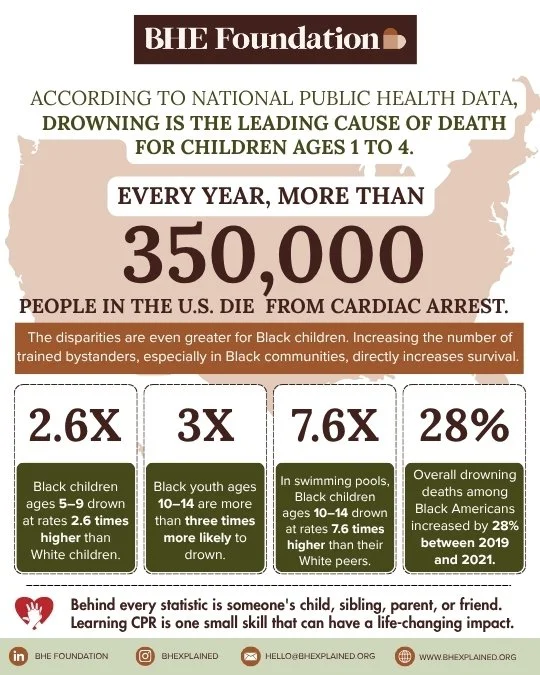
According to national public health data, drowning is the leading cause of death for children ages 1 to 4. The disparities are even greater for Black children:
Black children ages 5–9 drown at rates 2.6 times higher than White children.
Black youth ages 10–14 are more than three times more likely to drown.
In swimming pools, Black children ages 10–14 drown at rates 7.6 times higher than their White peers.
Overall drowning deaths among Black Americans increased by 28% between 2019 and 2021.
Behind every statistic is someone's child, sibling, parent, or friend. Learning CPR is one small skill that can have a life-changing impact.
What Is CPR?
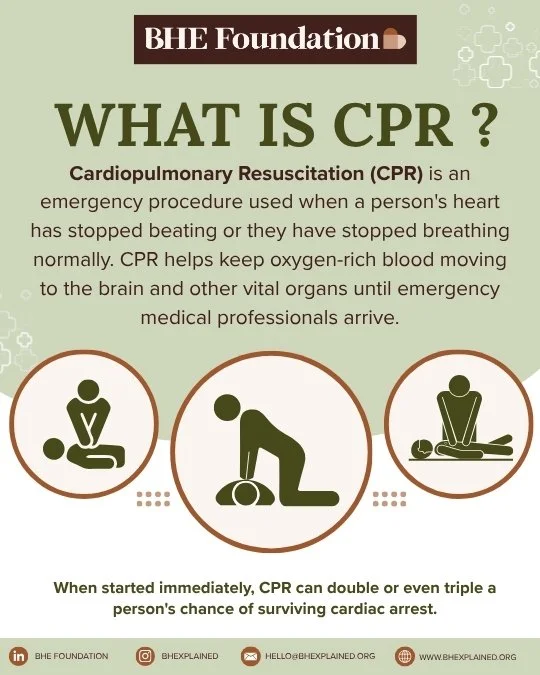
CPR (Cardiopulmonary Resuscitation) is an emergency procedure used when a person's heart has stopped beating or they have stopped breathing normally.
Every year, more than 350,000 people in the U.S. die from cardiac arrest. Increasing the number of trained bystanders — especially in Black communities — directly increases survival.
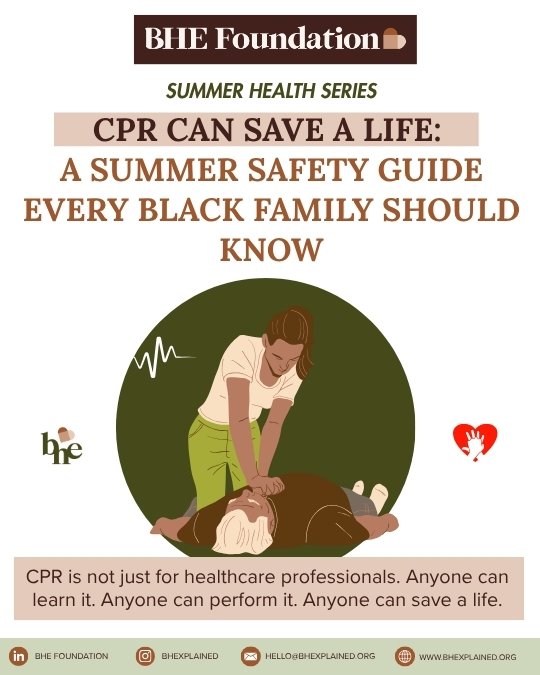
CPR is not just for healthcare professionals. Anyone can learn it. Anyone can perform it. Anyone can save a life.
CPR helps keep oxygen-rich blood moving to the brain and other vital organs until emergency medical professionals arrive.
When started immediately, CPR can double or even triple a person's chance of surviving cardiac arrest.
Why CPR Matters in the Black CommunityHealth equity means ensuring everyone has the knowledge and resources needed to stay healthy.
Unfortunately, many Black communities face barriers that can affect emergency outcomes, including:
Limited access to swimming lessons
Lower rates of CPR training
Delayed emergency response in some neighborhoods
Higher rates of chronic conditions linked to cardiac arrest
Learning CPR is one way we can help protect our families, friends, churches, schools, and neighborhoods.
Knowledge saves lives.
How Do You Know Someone Needs CPR?
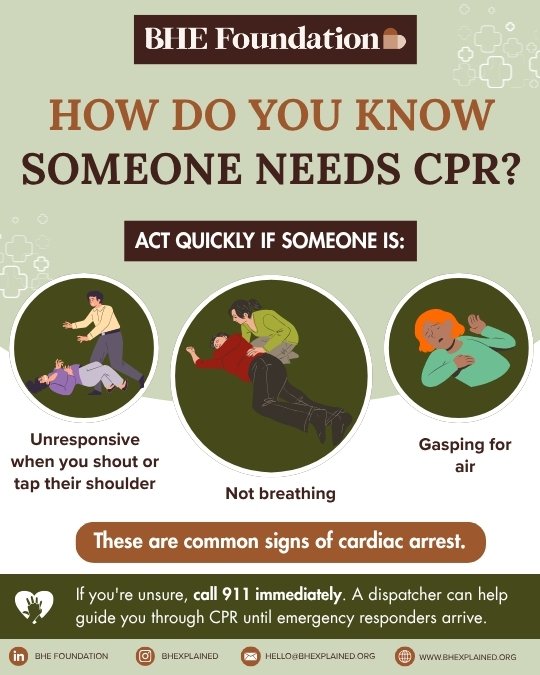
Act quickly if someone is:
✔ Unresponsive when you shout or tap their shoulder
✔ Not breathing
✔ Only gasping for air
These are common signs of cardiac arrest.
If you're unsure, call 911 immediately. A dispatcher can help guide you through CPR until emergency responders arrive.
CPR may be needed after:
Cardiac arrest
Drowning
Choking after the airway is cleared
Electrocution
Drug overdose
Severe trauma
Certain medical emergencies
What About Drowning?
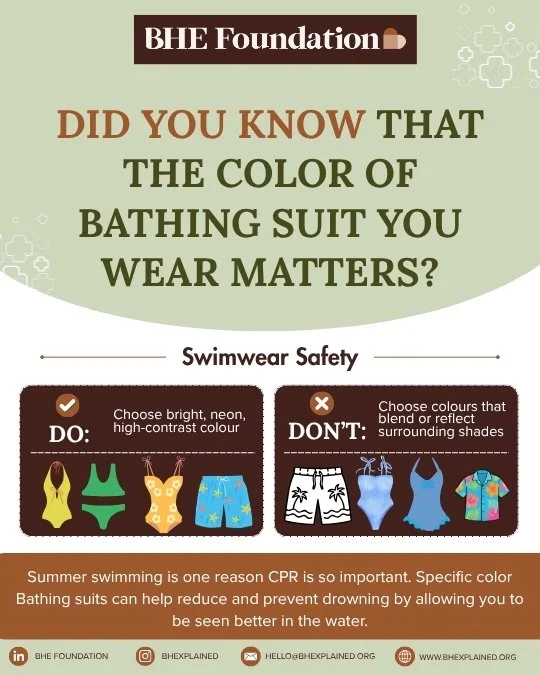
Summer swimming is one reason CPR is so important.
If someone has been pulled from the water:
Call 911 immediately.
Begin CPR if they are unresponsive and not breathing normally.
Use an AED as soon as one becomes available.
Continue CPR until emergency responders take over.
Even if someone seems to recover after a drowning incident, they should still receive immediate medical evaluation.
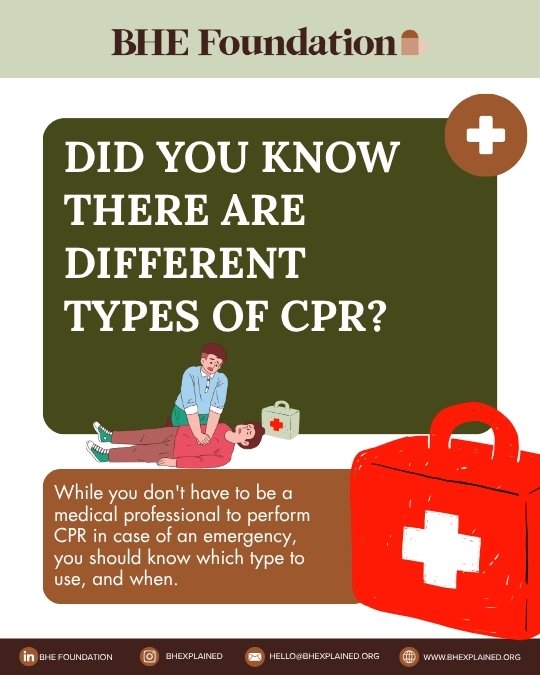
You Don't Have to Be a Healthcare Professional!
One of the biggest myths about CPR is that you need a certification before helping someone.
You don't.
Anyone can perform Hands-Only CPR.
Healthcare professionals receive advanced training, but everyday people—parents, teachers, coaches, neighbors, coworkers, and even teenagers—save lives every year by stepping in before first responders arrive.
Doing something is almost always better than doing nothing.
Hands-Only CPR: The Skill Everyone Should Know
Full CPR (Compressions + Breaths)
If you are trained and confident:
Check for breathing and pulse (no more than 10 seconds).
Perform 30 chest compressions, then 2 rescue breaths.
Repeat until help arrives or the person recovers.
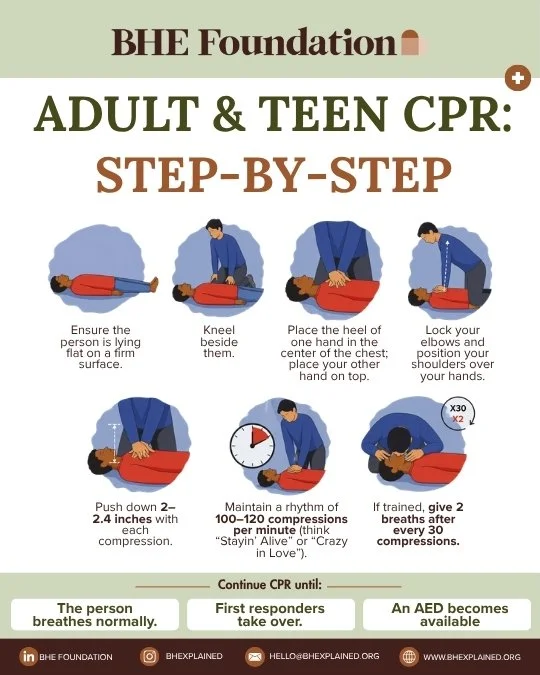
Adult & Teen CPR: Step‑by‑Step
Ensure the person is lying flat on a firm surface.
Kneel beside them.
Place the heel of one hand in the center of the chest; place your other hand on top.
Lock your elbows and position your shoulders over your hands.
Push down 2–2.4 inches with each compression.
Maintain a rhythm of 100–120 compressions per minute (think “Stayin’ Alive” or “Crazy in Love”).
If trained, give 2 breaths after every 30 compressions.
Continue CPR until:
The person breathes normally.
First responders take over.
An AED becomes available
If you aren't formally trained in CPR, the American Heart Association recommends Hands-Only CPR for teens and adults who suddenly collapse. Hands‑only CPR is recommended for most adults and teens when a bystander is untrained or uncomfortable giving rescue breaths.
There are just three steps:
Step 1: Call 911
Call immediately or have someone nearby call while you begin CPR.
Step 2: Send Someone for an AED
An Automated External Defibrillator (AED) is often available in schools, gyms, airports, shopping centers, community centers, and many businesses.
Turn it on and follow the voice instructions.
Step 3: Push Hard and Push Fast
Place both hands in the center of the person's chest.
Push:
At least 2 inches deep
100–120 compressions per minute
Allow the chest to fully rise after each compression
Keep going until:
EMS arrives
An AED is available
The person begins breathing normally
You're physically unable to continue
Easy Way to Remember the Right Pace
If you've ever danced at a cookout, you've already heard the perfect CPR rhythm.
Aim for the beat of:
"Stayin' Alive" — Bee Gees
"Crazy in Love" — Beyoncé
Both songs fall close to the recommended compression rate of 100–120 beats per minute.
CPR for Children and Babies Is Different!
Children and infants often experience cardiac arrest because of breathing emergencies such as drowning or choking.
The biggest differences include:
Rescue breaths are more important for children and infants.
Chest compressions are shallower.
Infants require specialized hand placement.
Pediatric AED pads should be used when available.
Because these techniques are different, taking a CPR certification course is strongly recommended for parents, grandparents, babysitters, childcare providers, coaches, and anyone who regularly cares for children.
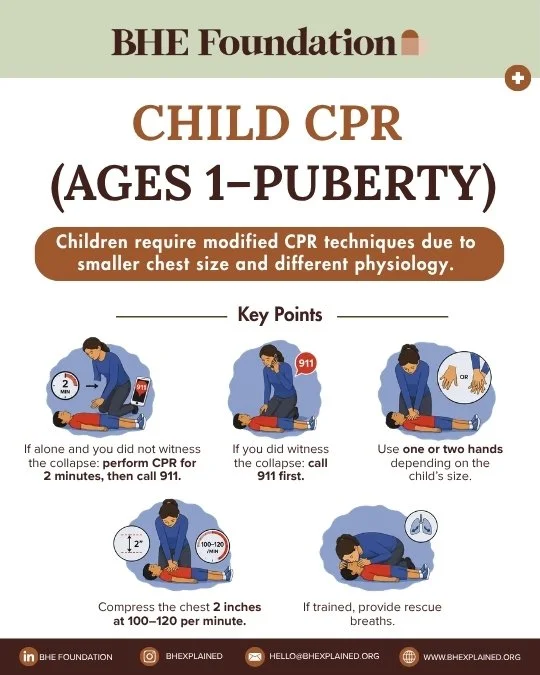
Child CPR (Ages 1–Puberty)
Children require modified CPR techniques due to smaller chest size and different physiology.
Key Points
If alone and you did not witness the collapse: perform CPR for 2 minutes, then call 911.
If you did witness the collapse: call 911 first.
Use one or two hands depending on the child’s size.
Compress the chest 2 inches at 100–120 per minute.
If trained, provide rescue breaths.
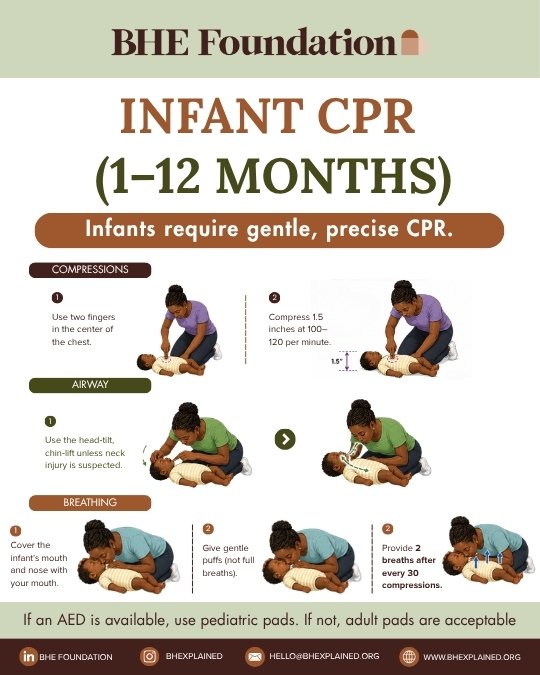
Infant CPR (1–12 Months)
Infants require gentle, precise CPR.
Compressions
Use two fingers in the center of the chest.
Compress 1.5 inches at 100–120 per minute.
Airway
Use the head‑tilt, chin‑lift unless neck injury is suspected.
Breathing
Cover the infant’s mouth and nose with your mouth.
Give gentle puffs (not full breaths).
Provide 2 breaths after every 30 compressions.
If an AED is available, use pediatric pads. If not, adult pads are acceptable.
Make This Your Summer Challenge
Before summer ends:
☐ Learn Hands-Only CPR
☐ Find the nearest AED at your workplace, gym, or church
☐ Encourage your family members to take a CPR class
☐ Teach your teenagers when to call 911
☐ Share this article with someone you love
You never know whose life you may save.
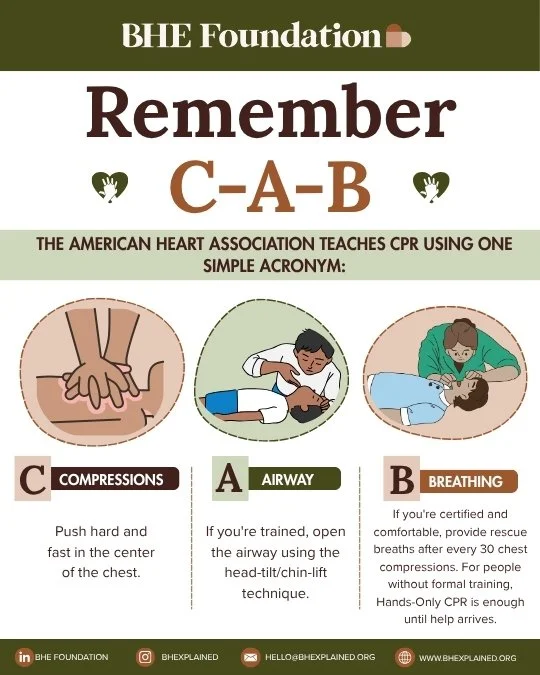
Remember C-A-B
The American Heart Association teaches CPR using one simple acronym:
C — Compressions
Push hard and fast in the center of the chest.
A — Airway
If you're trained, open the airway using the head-tilt/chin-lift technique.
B — Breathing
If you're certified and comfortable, provide rescue breaths after every 30 chest compressions.
For people without formal training, Hands-Only CPR is enough until help arrives.
Final Thoughts
We spend time planning vacations, buying swimsuits, and packing coolers—but very few of us prepare for emergencies.
CPR is one of the most powerful skills an everyday person can learn. You don't have to work in healthcare to save a life. You simply have to be willing to act.
This summer, make safety part of the plan. A few minutes of learning today could give someone else a lifetime of tomorrows.
Where Can You Get CPR Certified?
Hands-Only CPR takes only a few minutes to learn, but becoming CPR certified gives you the confidence to respond in more situations.
Some trusted organizations include:
American Red Cross
American Heart Association
National CPR Foundation
Many local hospitals, fire departments, community colleges, YMCAs, and recreation centers also offer affordable CPR certification classes throughout the year.