Protecting Your Peace: Digital Wellness
Summary: We are living in a time in which we are exposed to so much information all the time, even when we do not intend to hear about these things. We are also living in a time when it feels like we are constantly hearing bad news. In this blog, we discuss the negative impacts of exposure to negative content on social media and ways to set boundaries. Social media is a big part of most of our lives. We use it for entertainment, to document special moments, and to build community with those around the world with similar interests. It has become a hub to share information on world news, domestic affairs, health information, and pop culture. You may have found this blog because you follow BHE Foundation on social media!
The Negative Impact
While these are all positives, there’s a negative side to it. With so much information coming our way, we can be overly exposed to bad news. With the current state of the world, hearing everything going on all the time can be very overwhelming and have negative impacts on our health.
Most of us have heard or used the phrase “living vicariously through someone” when we experience positive feelings after hearing about someone else's positive experience. Vicarious trauma is basically the opposite of that. Vicarious trauma is described as a disturbing or negative emotional experience due to discovering traumatic events from another person. Vicarious trauma can cause symptoms such as:
Feeling emotionally numb.
Sleeping difficulties.
Irritability.
Feelings of hopelessness.
Withdrawing from personal relationships.
Increased distractibility.
Mood changes.
Research has found that threatening, shocking, or morally provocative material captures attention more than neutral content. Constant exposure to videos on various media platforms showing harm to Black Americans increases how likely a Black person will experience vicarious trauma by being traumatized after watching the event occur.
Because algorithms favor content that will keep us engaged longer, we continue to see content and news that will draw feelings such as anger or fear, causing us to doom-scroll. Doom-scrolling can cause an increase in or cause anxiety, sadness, fear, depression, and insomnia, among other symptoms. Secondary effects may be caused as well, including negative impacts on physical health, sleep, and eating habits.
How to Protect Your Peace
Protecting your peace is not about ignoring reality. It is about resistance and sustainable care. We all need to disengage from the news of the world and take a moment for ourselves to reset. Below are some tips to set boundaries with your social media use and control what shows up on your feed.
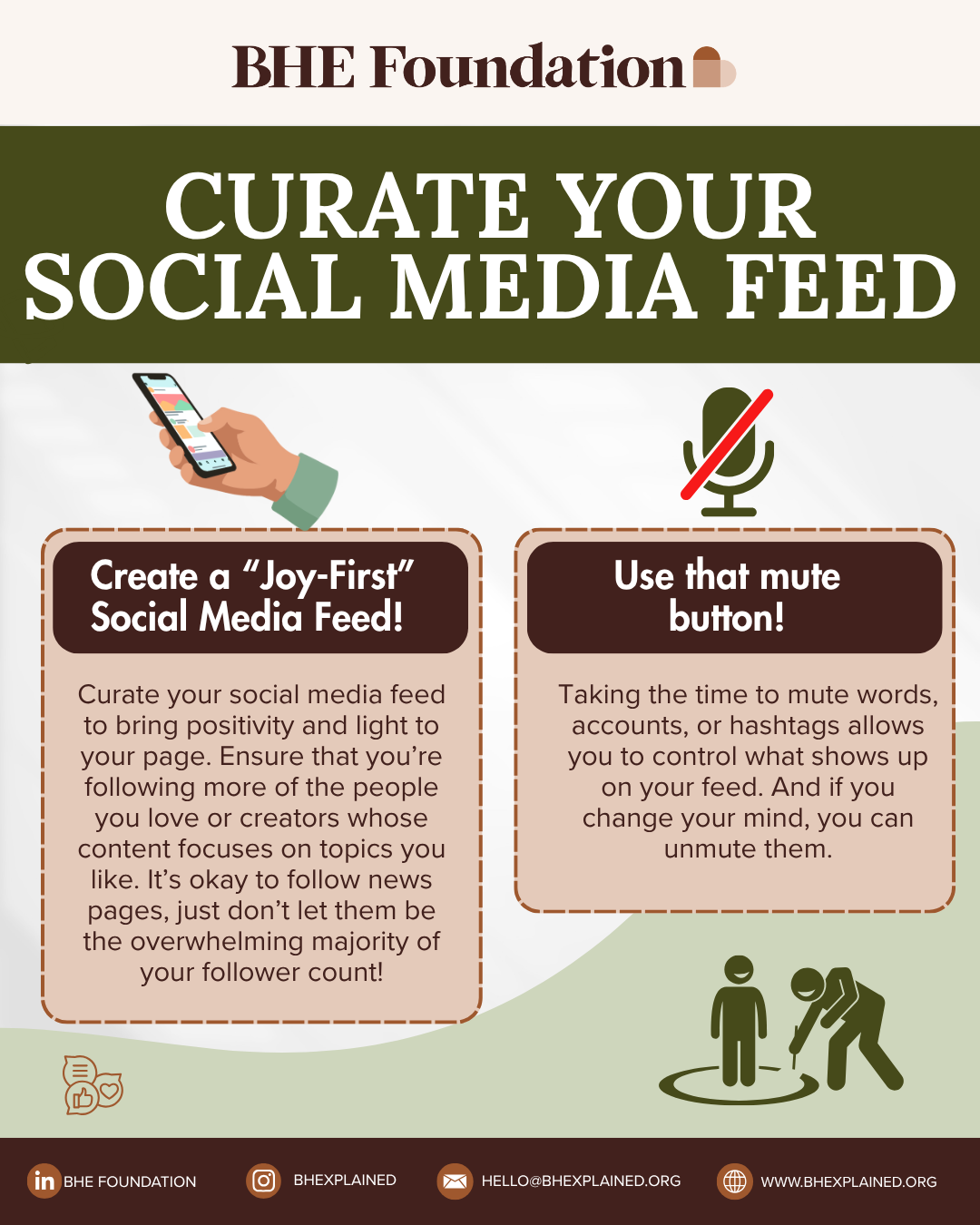
Muting can be your best friend. Social media platforms have various “mute” functions that you can use to curate your social media feed. The function can be used to filter posts, words, hashtags, and accounts from showing on your timeline or feed. And if you decide you’re okay with seeing that content or account again, you can go right back to your settings to unmute it.
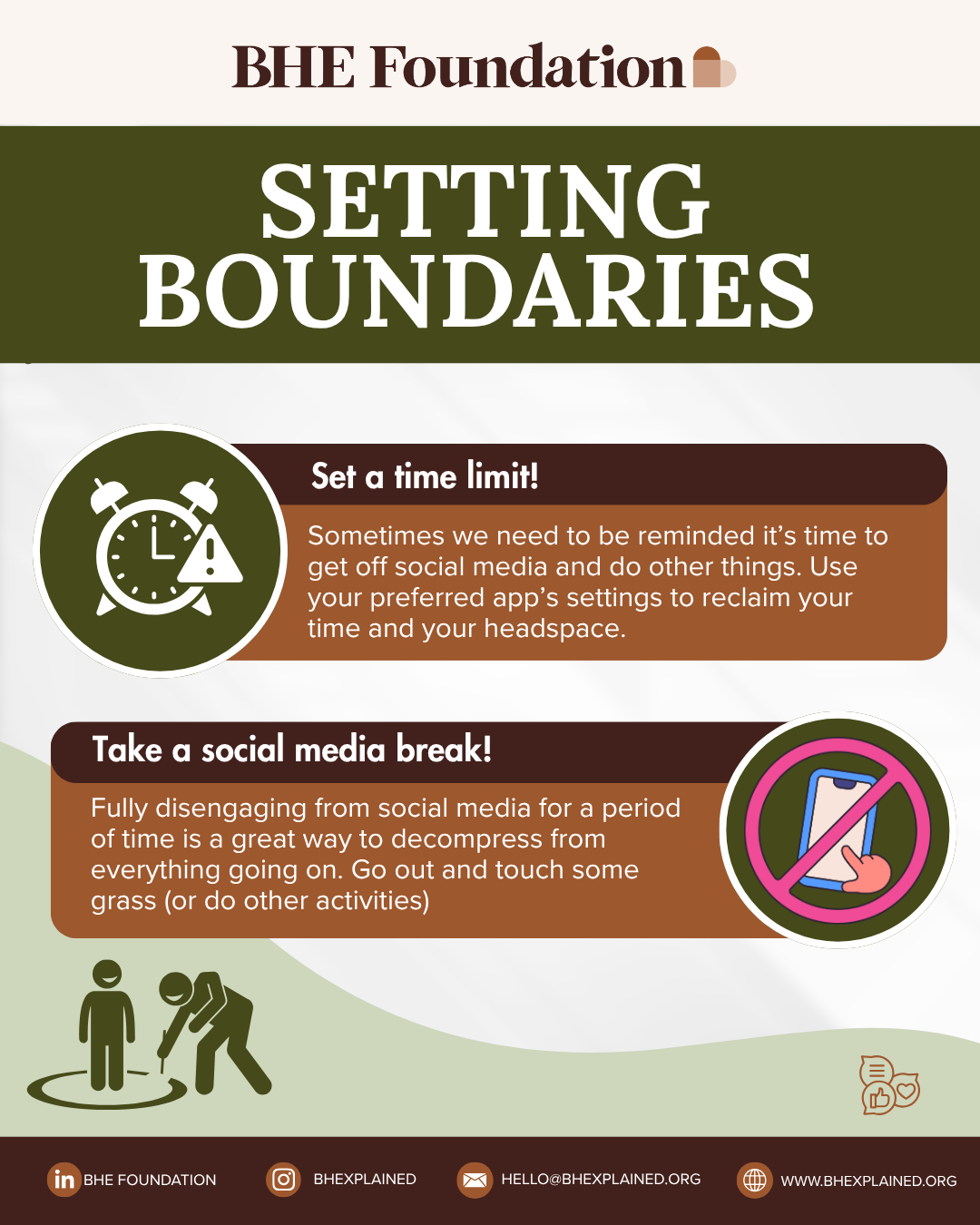
Think about setting a time limit. Are you a doomscroller?Or you just happen to look at the time and realize you’ve been on TikTok for over an hour? It may be time to add a time limit to your social media app of choice. Apps such as TikTok, Instagram, and YouTube offer a daily limit feature, where you set your time limit for using the app each day. TikTok also has a screen break feature that allows you to set a reminder to take a break after a period of time.
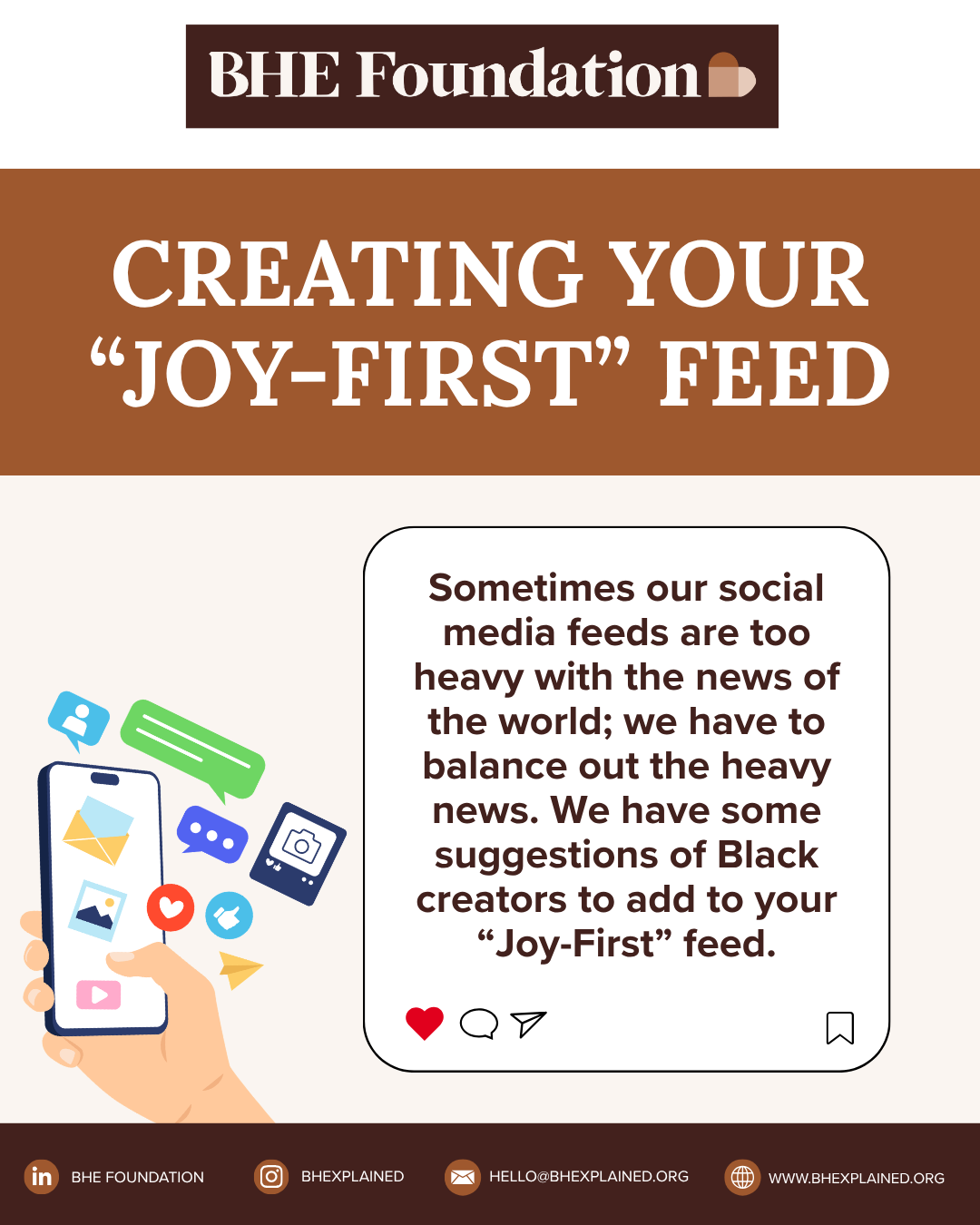
Create a “Joy-First” Feed. There should be balance. Creating a “Joy-First” feed means ensuring there is enough positive or enjoyable content on your social media feed. Your “Joy-first” feed should center on topics and people that make you happy and relaxed. This could look like creating a separate social media account or the use of specific feeds, such as the “For You” feed on TikTok or the “Favorites” timeline on Instagram. Whether your feed focuses on Black leisure, art, comedy, or your loved ones, the important thing is to have some way to balance out the heavy content that makes its way on our feeds.
Take a social media break. Of all the ways to disengage from social media, this one could be both the easiest and hardest to implement. Delete the apps and take some time off. Whatever time feels right to you. If you’re chronically online, this could feel weird for the first few days. But as time goes on, you’ll get used to it. Use the time you would spend scrolling on social media to do other activities. Go outside and touch grass! Or pick up the book you've been meaning to read, or start that crochet kit that you bought that’s collecting dust. And once your social media break is over, you can use the previous tips to set some boundaries!
Conclusion
It is important to know what is going on in the world. But it is equally important to take care of ourselves. With the access to information that social media gives us, we can be exposed to a lot of heavy news at once, and that does take a toll on us. We at BHE Foundation encourage you to take a look at your current social media habits and figure out how you can maintain your joy.